

The UK is today home to the third biggest e-commerce market in the world. That’s right — ahead of Germany, ahead of Japan, and trailing only the US and China. In such a competitive landscape, having a strong, protected brand is more important than ever.
In this article, we’ll take a look at the connection between domain names and trademarks, and their importance for robust brand protection.
What’s the difference between a Domain Name and Trademark?
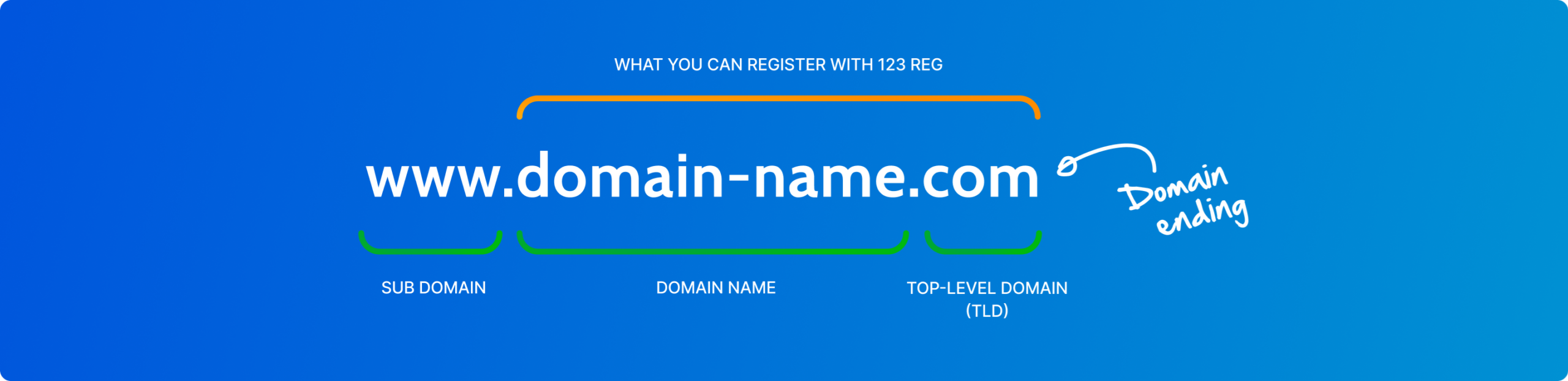
A Domain Name is your website’s address on the internet — what people type into their web browser to find your space online (like www.123-reg.co.uk). They’re:
☑︎ Always unique.
☑︎ Thousands of options are still available.
☑︎ Valid as long as you and the registrar agree.
Domain Names are always unique, and there are thousands of great domain names available. They’re valid for as long as the registrant (buyer) and registrar (seller) agree.
A Trademark is a word, phrase, symbol, or design that distinguishes your goods or services from others. It:
☑︎ Gives legal protection for your brand.
☑︎ Without it, others could use your brand with little consequence.
Your Trade Name, then, is the name your company operates under for everyday business, also called “Doing business as” (DBA).
☑︎ Doesn’t always expire like a trademark.
☑︎ Different from a legal Company Name, which limited companies must register. Sole traders may not need one.
Sometimes a domain name can closely resemble an existing trademark. So it’s important to do your “due diligence” (ie, a bit of research) before settling on a new domain, especially if you’re starting an online business.
Before we go any further: Remember it’s always best to seek guidance from qualified legal professionals or official government sources. We’re neither! For more information, be sure to check out the Companies House website.
See also: How to Apply for a Trade Mark in the UK
How do you protect your brand online?
Buying a domain doesn’t automatically register your business; it simply secures your address on the web.
Registering a trademark helps prevent competitors or cybercriminals from profiting from your brand and protects your brand identity. It’s how customers recognise you.
To fully protect your business, you’ll also need to register with the government and consider filing trademarks. Ideally, your domain name and trade name should match or be very similar. This creates a strong, recognisable brand and shields you from copycats, both online and offline.
Securing your brand’s future means finding the right domain and registering your trademark. Without both, you could risk losing the rights to a domain if a trademark owner proves your domain could confuse customers.
See also: How to Choose the Best Domain Ending in 2026
Who regulates Domain Names?
The Domain Name System (DNS) acts like the internet’s phonebook, helping to organise long numbers (IP Addresses) into web addresses people can easily say and remember. Details about registered domains (like the owner or registration date) are publicly accessible through a system called WHOIS.
123 Reg offers Domain Ownership Protection so you can stay anonymous in the WHOIS database, giving your domain more protection.
The Internet Corporation for Assigned Names and Numbers (ICANN), a non-profit, governs the global DNS system, managing top-level domains like .com and .org and setting policies for new ones.
Who regulates Trademarks?
Trademark laws vary around the world. In the UK, the Intellectual Property Office (UKIPO) handles trademarks, and you can use their database to check existing registered marks. Companies House also has a Company Name Availability Checker for registering business names.
Trademarks are handled by other organisations globally (like USPTO in the US and EUIPO in the EU).
While the basics are similar, registration processes differ depending on the country.
Can I trademark a Domain Name?
Yes, but owning a domain doesn’t automatically give you trademark rights. You must register it separately.
Trademarking your domain adds much stronger legal protection. Trademarks are intellectual property and can stop others from using your name as a domain without permission. This gives you rights in your industry and region, and legal tools to stop confusingly similar uses.
Trademarking also helps in disputes if your domain resembles an existing trademark — whether that’s in the main domain (second-level) or the “.com/.co” part (top-level domain).
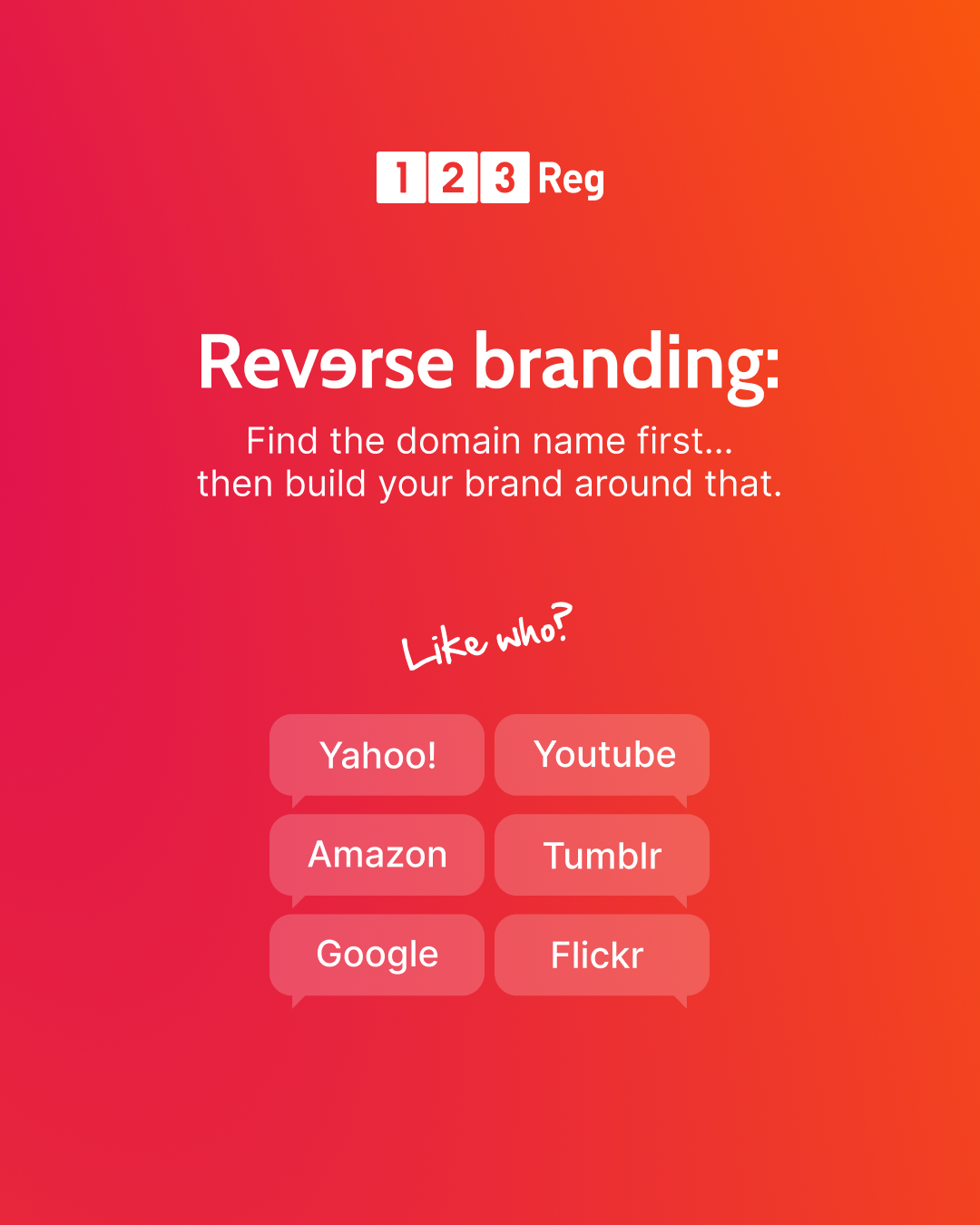
Top Tip: Try ‘Reverse Branding’
-
- Starting an online business? Try flipping the usual approach: choose the domain first, then shape your brand around that. From Reddit to Instagram, Slack to Flickr, lots of top companies began with a strong domain and let that inspire their brand.
I own the Trademark. Don’t I have rights to the Domain Name?
Not automatically. Different entities can hold the same trademark in different markets, or the domain may already be registered legally.
❝ Being the owner of a registered trade mark, does not automatically entitle you to use that mark as a domain name. The main reason being, that the same trademark can be registered for different goods or services and by different proprietors. Also, someone may have already, and quite legitimately, registered the domain name, perhaps with its use being connected with unregistered goods or services.❞
https://www.gov.uk/guidance/unacceptable-trade-marks/
As a general rule, if a domain name is registered before someone else trademarks the similar term, you may have a stronger claim to its continued use.
However, trademark law is complex, there are always exceptions, and it’s always best to consult professional guidance.
Using similar-looking domains to established brands (like “1234 Reg dot-something”) might actually fall under the realm of trademark infringement or cybersquatting. More on that later.
Can my Domain Name infringe on someone else’s Trademark?
Yes. Domains can infringe trademarks if they are too similar to protected marks, potentially confusing consumers and harming a brand’s reputation.
For example, registering “Burberry-coats-dot-something” without permission could cause legal trouble if people think the site is affiliated with the fashion brand.
Even broad names can be tricky. Booking.com was once argued to be too generic to trademark, but the US Supreme Court ruled in its favour.
To sum up, the potential for infringement goes in both directions:
□ On Others’ Trademarks: Using a name too close to a trademark could lead to legal action.
□ By Others on Your Trademark: If you haven’t protected your trademark, someone else could register it as a domain.
See also: The Cheapest UK Domain Registrars Compared
What is a Premium Domain?
A Premium Domain is a domain that’s priced higher than standard domains because it’s short, memorable, or in high demand. Think names like music.com or cars.com — the kind of domains often seen as highly valuable because of their strong branding potential.
Some premium domains are priced directly by the domain registry rather than the registrar. These are known as Registry Premium Domains. They usually carry higher ongoing costs for registration, renewal, and transfer.
See also: How to Buy and Register a Domain Name in the UK
Can I register a TLD (domain ending) associated with my trademark?
The Trademark Clearinghouse (TMCH) helps protect trademarks when new generic Top-Level Domains (gTLDs) are launched. gTLDs are new domains without ownership restrictions, like .info, .ltd, or .ai.
Registered trademarks in TMCH receive notifications if someone tries to register a conflicting domain.
New gTLDs are rare, and mostly major organisations register them. Trademark owners can submit marks to TMCH before and during the launch, giving first option to register new TLDs (Sunrise Period). You’ll get an SMD file, acting like a password, to register your TLD.
What happens if I try to order a domain with a Trademark Claim?
When you search for a domain and add it to the basket, you will receive a page informing you of any trademark claim. There will be an explanation of the trademark claim, along with a statement explaining that registering the domain may lead to a Trademark dispute.
You can then either remove the domain from the basket or confirm that you have read the notice and continue with the order.
Once the transaction goes ahead, the owner of the trademark will be notified that the domain has been registered. From there, they can potentially file for a trademark infringement dispute, in case the domain in question is used abusively.
What is Domain Parking?
Domain parking is like buying land online and leaving it empty. You register a domain but don’t link it to active services. This can hold a name for future use or prevent others from taking it.
Some use parking as an investment, displaying simple pages with ads that generate revenue. High-value domains, like single-word .com names, might be parked while waiting for a big offer.
For example, Insurance.com sold for $35.6 million in 2010. Some registrars even auction off the most valuable parked domains.
See also: What is Domain Parking?
What is Cybersquatting?
While Domain Parking is generally a legit strategy for reserving domains for future use, ‘Cybersquatting’ is a situation in which domains have very obviously been registered in bad faith — sometimes to profit from or harm the rightful trademark owner.
We’ve all had that experience of arriving at easy-to-type domains quite by accident (like stumbling upon an awful sort of digital Time Square or Piccadilly Circus). The experience is often poor (if not downright infuriating) — a minefield of pop-ups, click-bait, and all the worst things about the internet.
If you own a valuable domain name but aren’t yet ready to develop it, domain parking might be a short-term solution, but other options, such as “under construction” pages or domain resale, might be more worthwhile for long-term brand-building and value.
For more, check out: The Most Expensive Domain Ever Sold
Wrap up
Domains, trademarks, and trade names all serve different roles in building a strong brand. Understanding the difference helps you protect your business properly.
Registering a domain gives you a home online, while trademarks protect your brand identity. Matching your domain and trade name strengthens your brand and helps guard against copycats.
The best names go fast — so start your search today.