

Eight Tips to Write Compelling Product Descriptions That Sell

It’s a common mistake — even among professionals — to write product descriptions that only list features. Too often, copy ends up reading like a spec sheet rather than a story, leaving customers without a clear sense of why the product matters to them. But features alone don’t sell. They don’t tell a story, spark emotion, or help customers picture how life might be better with your product. These eight tips will show you how while making sure your copy works for mobile users and search engines. 1. Know your ideal customer Before you start writing, get clear on who you’re talking to. Different people buy for different reasons, so trying to please everyone means you’ll connect with no one. Do a little research: check website analytics, read customer reviews, or run a quick survey to understand who’s buying and why. What questions do they ask? What problems are they trying to solve? What tone do they respond to — straight-talking, playful, or inspiring? Create a simple customer persona with a name, job, and backstory (For example: “Sarah, 32, urban professional, wants stylish, durable bags that keep her organised on the commute.”) Personas help you write as if you’re talking to a real person rather than a vague audience. Also, think about the words your audience searches for and include them naturally. This helps your product show up in Google, AI-driven search results, and voice queries while keeping your copy relevant and discoverable. Write as if you’re having a conversation in a shop. Imagine your customer stepping in — how would you explain the product to them? Use that same natural language online so your descriptions resonate just as well. 2. Sell results, not features Stop selling features and start selling what actually happens after someone buys your product. People aren’t really buying drills — they’re buying perfectly drilled holes. They don’t buy gym memberships — they’re after feeling energised and confident. Think about the transformation your product delivers. Ask yourself: ✓ What problem does it solve? ✓ What goal or dream does it help achieve? ✓ How does it make life easier, happier, or more comfortable? ✓ Does it offer status, recognition, or peace of mind? Try to include measurable or tangible benefits whenever possible. For example: instead of “10mm steel drill with ergonomic handle”, say “Make perfect holes in seconds — and keep your fingers safely out of harm’s way.” Or if it’s a planner: “Plan your week in 10 minutes and cut your stress in half.” Including outcome-focused keywords helps your product appear in search results for what people actually want. For example, someone searching “quick hole drill for shelves” is looking for a result — not the drill’s technical specs. By focusing on the outcome, your description speaks both to human shoppers and AI-driven search systems. Paint a picture of the benefit or transformation, and let the product’s features support that story rather than lead it. 3. Highlight the product experience Online shoppers can’t touch, taste, or feel your products — but your words can help them imagine it. The more vividly they picture using your product, the more likely they are to buy. For example, you can use sensory and storytelling techniques: ✓ Start sentences with “Imagine” or “Picture yourself.” ✓ Describe how the product feels, smells, or sounds. ✓ Show what the customer experiences now and after using it. ✓ Include short, active sentences that read well on mobile. For example: “Imagine slipping into this soft cotton jumper on a chilly morning — warm, comfortable, and ready for the day.” You can also combine experience with small details to boost SEO. Include words people might search for naturally: material, style, comfort, or location if relevant. For example: “Soft organic cotton jumper, perfect for chilly London mornings.” This way, your description engages readers while also improving AI and search visibility. 4. Be concrete and specific Clichés like “excellent quality” or “best ever” don’t convince anyone. If you want to stand out, explain exactly why your product deserves praise. Use details, stats, awards, or customer words to back up your claims. For example: “Voted Best Carry-On Bag by The Wirecutter, with padded laptop compartments and room for a weekend’s worth of clothes.” Specifics do more than impress shoppers. They also help AI and search engines understand your product. Including clear keywords — like material, size, style, or local relevance — makes your description more discoverable. Customer quotes or short testimonials can also boost credibility. A line like “I never leave home without it — keeps everything organised and secure” feels authentic and gives shoppers confidence. Remember: features support the story, but the story is what convinces people to buy. The more precise you are, the easier it is for both humans and AI to understand what makes your product unique. Find the perfect fit for your business from 400+ domain extensions 5. Leverage social proof Nothing reassures potential buyers like seeing that others already love your product. Reviews, testimonials, ratings, and user photos all give real-world approval. Even a simple line like “Trusted by over 500 happy customers” can make a big difference. You can also highlight “Best Sellers,” “Customer Favourites,” or “Most Gifted” labels to gently guide buyers toward your most popular items. Social proof isn’t just for humans — AI recommendation engines also look at popularity, reviews, and engagement to decide which products to suggest. Featuring real customer experiences helps boost your product’s visibility, both in search results and AI-driven shopping assistants. Where possible, include different types of social proof: short reviews, star ratings, and images of customers using the product. This gives a fuller picture and builds trust quickly, especially on mobile screens where shoppers skim content. 6. Make descriptions easy to scan on mobile Most shoppers skim rather than read, especially on phones and tablets. Your product description should make the key points instantly clear. Here’s how: ✓ Use short paragraphs and bullets to break
Getting your writing right
If content is king, the way you tell it is certainly in line for a noble title. How your chosen words and sentences combine can have a massive influence on your readers. Tapping into a reader’s subconscious is a route to hidden sales and making a connection with a visitor to your site also makes them more likely to react positively to you and spread the word. So here are our six tip top tips on writing engaging copy that will keep your readers entertained and coming back for more. 1. Reason Anybody can give an opinion, but to back it up with proof gives you credibility and gives your argument sense. Telling people what you think and then telling them why you think that gives them a chance to ‘reason’ your argument themselves, although in practice they rarely do, instead natural instinct means more credibility is given to those who offer a reasoned approach. 2. Compare Your chosen words are your tool and the use of metaphors, similies and analogies are the master wordsmith’s tools of choice. By offering examples, comparisons and illustrating your writing in a literary sense you immediately get your reader thinking about what they are reading, gaining their attention and ensuring they read on. 3. Prove Reasoning and comparing are steps towards proving what you say but a customer testimonial or external review adds extra validation. Whatever you say, however you re-inforce it, having another person confirming the same is always going to more strength to your argument and make people sit up and take more notice. 4. Empathise Getting your readers to agree with your thoughts is a perfect way of engaging them, and to do that you need to understand your readership and make them feel you know them well. You also want them to think you know the topic well too. That gives you credibility, immediate impact and with that persuasiveness too. 5. Repeat Psychologists swear by it. Students succeed by it and TV Broadcasters survive by it. Repetition re-inforces your point and triggers subconscious memory points that will make information recall more likely in the future. Use it wisely though. Just repeating the same thing in the same way however will ultimately turn your reader off. Making the same point in different words is easy, as is making it in a different way such as with a second example. Reminding your reader what your aim of the article is about will also make sure they are in the right mindset to read it. 6. Respond A two -way conversation is always more successful. If a reader responds to your piece, either via direct comment or perhaps via social media, make sure you respond back. They have taken time to not only read your piece but also to reply, so give them the respect they deserve and do the same. Picking your words and making them work on the page can drastically improve your engagement scores and ultimately your sales too. Take care, take your time and take note of the reaction when you do finally publish your content and you will quickly begin to see a positive response.
6 Top Tips on How to re-use your content without upsetting the search engines
If you’ve written a decent blog, there’s no surprise that you may also want to use it across more than one site – perhaps on a sister brand, or even a guest blog post for a third party. Yet, doing so may see you fall foul of duplicate content penalties from Google and Bing, and with those rules not always clear, how do you know what is right and what is wrong? Here’s our six top tips to re-using your content without causes red flags from search bots. 1. Be the best and be the first Search Engines dislike duplicate content, but they love duplicated content. Well not love, but if it is clear to a searchbot that you wrote and published it first and that the copy text is just that and duly linking back to your website, that should help boost your ranking. 2. Re-use but re-purpose There’s something to be said for the old adage that nothing is ever original. People have been writing books, magazines, etc long before online content ever came about and even stuff about techie subjects is often a fresh subject but well-worn approach and comments. So coming up with original content doesn’t actually literally mean that. It is perfect acceptable to use old content and re-package it. Re-focus it for a new audience, maybe a new age-range requiring different language. Search bots are clever but they look for language patterns and if you are re-writing a blog in a different style and with different words, they probably won’t spot the similarities. 3. Vary your approach Statistics are great, they can mean anything you want and the same is true about words, phrases and even official statements. Even if you use the same facts the wide variation of newspapers that still exist in this country shoes that with a different take on them you can write a very different piece, and certainly not one likely to come across and duplicated. 4. Pick a new entry point If you first wrote a piece about first-time car purchases, have a think how you can give the same piece a slightly different starting line. Obviously you need to change more than just the opening line, but you will be amazed how that opening sentence has a massive influence on how the rest of your blog will flow. For example: Consider a blog on the effects on the car industry as a whole given the choices now available to the first-time car buyer, or perhaps the information sources now available to the first time buyer and how that influences them. Same facts and research probably, completely different blog. 5. Re-examine your research for new gems As I pointed out, this is nothing new. Freelance journalists have been using these tricks of the trade for years. One exclusive interview will only normally be published in one magazine but some of the unused quotes from the same interview can probably be used in another three or four articles, not just focused on that interviewee, but the subject they talk about, etc. 6. Turn a news piece into a reflective piece Another journalistic tool. If you wrote a blog last month about the imminent launch of the iPad 3, there’s no harm in re-using much of that for another blog elsewhere but update it. No longer news, now you can add comments of those lucky enough to have been using an iPad3 in the past few weeks. How has it compared to what they expected? Using and reusing content, is becoming a must in the busy demands of the online world, but you need to have a strategy about how you achieve it and how it all works together. As ever, don’t just churn out content, make sure it fits somewhere and has a part to play in your longer-term strategy
Writing for mobile is twice as difficult
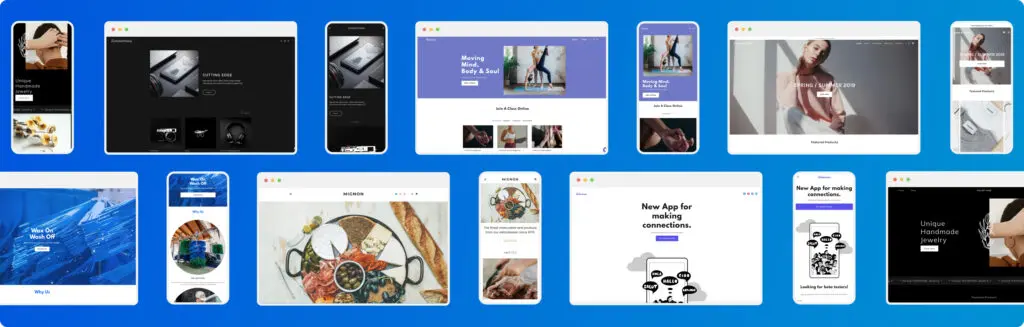
With so many people using a mobile device to surf the net, it’s important to know how to write and organise the content on your site so it’s user-friendly. When was the last time you checked how your site looks and reads on a mobile device? This is not something to be ignored as the number of users getting their daily dose of web information on the move is constantly increasing. This article aims to help you do a better job at writing content for mobile. It’s not scientific, just a few tips that can really make a difference. What do mobile users really need? Most people believe that the mobile version of your site should just condense all the information from your current site. In my opinion, that’s totally false! Why? Because condensing so much content in an effort to make it look better on a mobile device can actually act against you. Users might have an even harder time finding what they’re looking for. The purpose is to keep it simple and give your visitors exactly what they need. You might need to do some research and determine what exactly these mobile users are looking for on your site. Instead of just copy and pasting the content you currently have, work around it and only include the information that’s relevant to mobile users. Focus on their needs rather than on a good-looking site. Remove the unnecessary For mobile users, time is of the essence. They need to find information fast, so be sure they won’t have time to read the About page if all they want to do is buy a train ticket, or check if there’s a delay on their flight. Instead of including redundant content and using a small font so it all fits in, focus on filling that little space with useful information. Don’t overlook SEO It might be a mobile device they’re using to access your site, but search engines work the same regardless. This means that you shouldn’t forget about optimising the content on your mobile site with strong and relevant keywords. Make links visible With so many accessing the web using a touchscreen device, it’s important to make it easy for them to just tap on a link to get on a page. Work with your designer so that links are visible and can easily be clicked. In conclusion, when writing for mobile always think about your visitor’s needs and find ways to make their stay on your mobile site as enjoyable as possible.