

A URL, or Uniform Resource Locator, is the full address you see in the bar at the top of your browser. Most people would simply call it a web address.
Unlike a domain name, a URL includes the full address to a page, plus any extra parts before and after the domain that take you to specific content.
For example, https://www.123-reg.co.uk/blog/ uses the domain “123-reg.co.uk” plus with extra path that take you straight to the blog. So while a domain name takes you to a website, a URL can take you to an exact page within it.
What’s in a URL?
A typical URL has a few parts:
☐ https:// – the protocol, showing how data is sent between your browser and the website
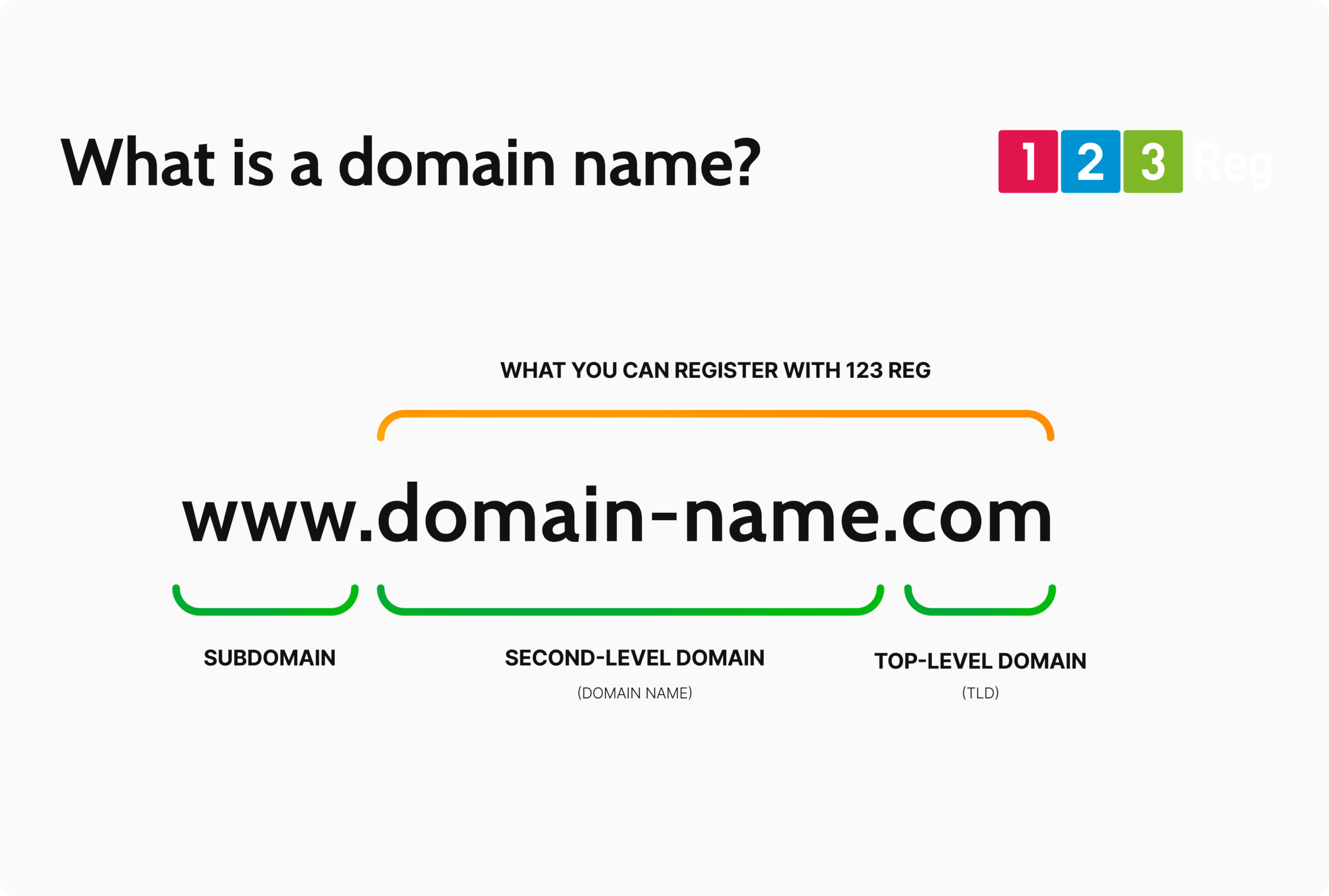
☐ www. – the subdomain (often “World Wide Web”). You don’t typically need to type it.
☐ 123-reg.co.uk – the domain name itself (what you can register with 123 Reg)
☐ /blog/ – the path to a specific page or file on the website
In short, the domain name is the part people recognise. The rest helps guide users and browsers to exactly the right page.
HTTP vs HTTPS? The ‘S’ stands for “Security” and shows the website is encrypted with an SSL Certificate.
For more, check out: What are SSL Certificates?
How URLs work
When you type a URL into your browser, it first looks up the domain name through the Domain Name System (DNS) — essentially the internet’s address book — to find the server hosting your website. It then follows the rest of the URL to load the exact page you’re after.
It all happens in seconds, so you’re taken straight to the right place.
See also: What is DNS?
What’s the difference between a URL and a domain name?
A domain name is the part you can register and own — like yourbusiness.co.uk. It’s the core identity of your website.
A URL is the full web address: the domain name plus anything after it that points to a specific page, like /contact or /blog.
You may also see www at the start. That’s a subdomain — a way of organising a website. It’s optional and doesn’t affect the main domain name.
Why URLs matter
URLs help people land directly on the content they’re looking for, without having to click around your site.
Clear, simple URLs are easier to share and give users a better idea of what to expect before they even click.
Why your domain name matters most
Even though a URL includes several parts, your domain name is the foundation of your entire web address.
That’s the thing people remember, type in, and associate with your brand. Every URL on your site is built around it, so choosing the right one matters.
Getting a domain name
A good domain makes every URL clearer and more memorable. It’s easy to register a domain name with a trusted provider like 123 Reg. Once you’ve got one, you can build out pages, create URLs, and start sharing your website with the world.
For more, check out:
- What is a Domain Name? A Beginner’s Guide to Domains
- How to Check If a Domain Name Is Taken or Available
- How To Get a Free Domain Name