

Have you ever wanted to start a business without a warehouse and mountains of stock?
Dropshipping is a way for solopreneurs to sell products direct from the supplier. You take care of the marketing and sales; they handle the packing and delivery to your customers. Job done.
The million-dollar question: what products are you going to try to sell?
This guide will take you through everything you need to know: UK rules, keeping costs low, finding suppliers, picking products, and steering clear of the common pitfalls so you can get your “dropshop” up and running.
Key takeaways
-
- ☑︎ Dropshipping lets you sell products online without holding stock as your supplier handles packing and delivery.
- ☑︎ Low upfront costs let you test ideas and experiment without a big investment. Start small, test products and scale as you find what sells best.
- ☑︎ Get your own domain and professional email to build trust even if you also sell on marketplaces.
- ☑︎ Choose reliable suppliers. UK or EU-based options mean faster delivery and fewer customs issues.
- ☑︎ Focus on fast, honest and helpful customer service to build and protect your reputation.
What is dropshipping?
Dropshipping is a clever way to run an online shop without ever having to store a single product yourself.
Instead of buying stock upfront, you list products from a supplier on your website — and when someone places an order, your supplier ships it directly to your customer. All you really need is a good website, a reliable supplier (or two), and a plan to get your products in front of the right people.
Done right, that means less risk, lower startup costs, and no need to pile up stock in your spare bedroom.
That leaves you free to focus on growing your shop — testing new ideas, honing your product range, and building a brand that people trust.
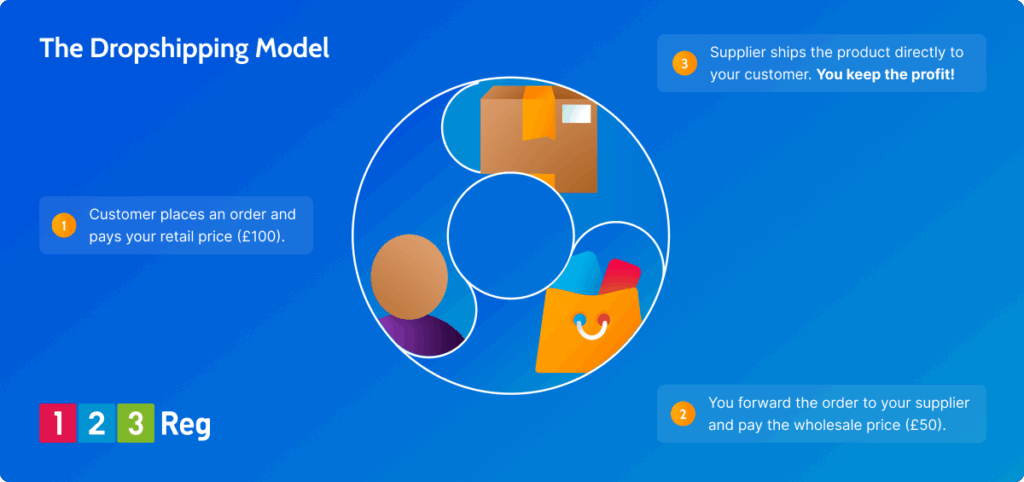
Dropshipping is just one of number of fulfilment or order fulfilment models. Where some businesses manage their own stock, or ship made-to-order items, dropshipping stands out because it takes out the need to handle products directly.
There are also lots of platforms and plugins out there to handle tasks like order syncing and stock updates for you, making your shop easier to manage. More on those later.
For more on starting an online business, check out: A 123 Reg Guide to Starting an Online Business
Closer look: Print-on-demand vs print-on-demand dropshipping
One popular way to sell online today is print‑on‑demand — custom products like t‑shirts, mugs, or calendars that are only made after someone orders them. If you tried to run print‑on‑demand at home, you’d need a printer or heat press, blank items, packaging, and plenty of time to handle each order yourself.
With print‑on‑demand dropshipping, then, you pass on both the production and delivery to a supplier. When someone buys from your site, the order goes direct to your print partner. They print the design, pack it, and ship it straight to your customer. No stock, no machines… no clutter in your house!

What are the benefits of dropshipping?
Dropshipping appeals to many small businesses because it keeps costs low and setup simple:
✓ You don’t need to invest in stock or warehouse space. A laptop, website, and a bit of creativity can get you going.
✓ Your shop can be live in days, once you’ve chosen your products and suppliers
✓ You can run your business from anywhere (kitchen table, café, or on holiday…)
✓ You’re not limited by what you can physically store, so you can test and sell a variety of items to see what works best
✓ More orders don’t mean more manual packing — as sales grow, your supplier does most of the heavy lifting
✓Because you only pay for products once they’ve sold, there’s less financial worry (even if they don’t fly off the shelves)
Is dropshipping right for me?
Dropshipping could work well for you if you’re looking to run online with minimal start-up costs and no room for stock. It can be a good fit for soloproneurs, creators, and influencers — but also a way to add another extra income stream to an existing business. The beauty is you can always test it out before fully committing, and build up from there.
When is dropshipping not the best option?
Dropshipping isn’t for everyone. If you want full control over stock quality, packaging, or delivery times, the hands-off setup can be frustrating. Profit margins are often slimmer too, especially in competitive niches. It’s less suited to brands that rely on fast delivery or a premium unboxing experience, since you’re trusting third-party suppliers to meet those standards. UK customers expect clear delivery times and easy returns, so be aware that long waits or unclear policies can deter buyers.
How does dropshipping work in the UK?
In the UK, dropshipping works much the same as anywhere else, but with a few extra rules to keep your business above board.
You still choose what to sell, set up your online shop, and connect with suppliers who handle packaging and delivery. When a customer buys from your site, you send their order details to your supplier, pay the wholesale price, and keep the profit.
Most people start as a sole trader and only register as a business once things start picking up. If you’re selling regularly and taking payments, it’s good to know when registration is needed and what your responsibilities are. From a customer’s point of view, they’re buying from you.
Is dropshipping legal in the UK?
Yes, dropshipping is legal in the UK — as long as you follow all the basic consumer rules and you’re clear about how orders get fulfilled. Even if a supplier sends the product, you’re still the retailer, so you’re the one dealing with refunds, returns, delivery questions and any customer issues.
As ever, we’re not qualified legal experts here at 123 Reg, so be sure to check out the Official HMRC Resources.

Keep in mind VAT and import charges. If you’re selling regularly, you may need to register for VAT, and if your supplier ships from overseas, customs fees or import VAT can apply. Being upfront about prices and delivery costs helps avoid awkward surprises for customers later on.
How much does it cost to start dropshipping in the UK?
Starting a dropshipping business really doesn’t have to cost much. Because you don’t hold stock, your main expenses are usually a small budget for a platform to list products and some marketing to test what sells. New sellers can get going with just £50–£300 to cover essentials.
Ongoing costs will mostly be on platform fees or supplier subscriptions, and paid ads if you use them. It’s generally easier to find an audience on existing platforms like Amazon and eBay, though they do take a cut of sales.
Even if Amazon’s your main gig, having your own website builds trust and gives your brand a proper home. For a professional edge you can get a domain from as little as 1p for the first year with 123 Reg. Pair that with business email and a good tool to create your webpages, like Website Builder or Managed WordPress Hosting, typically about £10–£30 a month depending on the plan.
See also: How Much Does a Website Cost? Less Than You’d Think!
How to start a dropshipping business – in 5 steps
1. Pick a product niche you love (or love enough to work with!)
Start by choosing a niche you know or love. Think fitness gear, eco-friendly gadgets, or pet accessories popular with UK buyers. Check what’s trending on social, or with a tool like Google Trends, and aim to pick products with good demand but not too much competition.
Keep it simple. Focus on items priced £15–£50 that solve a problem and ship easily to the UK.
2. Find a supplier (or a few) you can trust
Look at platforms like AliExpress, Oberlo, or UK-based suppliers such as CJdropshipping that offer fast shipping to Britain, ideally within 7–14 days. Choose suppliers with good reviews, automated order syncing, and return policies that follow UK consumer law.
We’ll cover more on finding suppliers later.
3. Get a domain name and set up your online shop
First, get your own space online. Grab a domain name from 123 Reg — you can also get a domain free for the first year using Website Builder. Add your products with clear photos, honest descriptions, and all your other info. You could have your shop up and running in a weekend.
You can also sell on marketplaces like Amazon, eBay, or Etsy — and many dropshippers do both. Running your own site builds trust and gives your brand a proper home, while marketplaces help you reach customers fast. Having your own website, though, will help to build that all-important trust in your shop.
If you’re using WordPress, a Managed WordPress Hosting plan makes setup simple. WooCommerce and dropshipping plugins like WooDropship, Spocket, or Dropified, can help source products and manage orders for you.
4. Launch with great marketing and/or social media engagement
Drive traffic with free channels like Instagram Reels, Facebook groups for your niche, or Pinterest pins, all targeted at UK audiences. You could also try spending a little (from £50–£100 or so) on Meta or a search engine marketing (SEM) tool like Google ads, and test what converts.
5. Keep improving, monitoring, tweaking
It’s all about learning as you go. Watch your sales to see what’s flying off the shelves and what isn’t. Focus on the winners, ditch the duds, and talk to your customers to fix things like slow shipping. Tweak your prices to keep margins healthy, and grow by adding more products or simple automated emails once sales are steady.
Don’t forget to use a professional email address to send buyers thank-yous and discount codes – it’s a great way to get people buying again.
See also: How to Get Your Business Found with Google Ads
Where do I find reliable dropshipping suppliers?
While you can sell on existing marketplaces like Amazon or eBay, these platforms aren’t the suppliers themselves. You’ll still need a trusted dropshipping supplier to handle stock, shipping, and returns.
Finding the right supplier is key to keeping your customers happy and your orders ticking over nicely. Some major ones include:
☐ Avasam – UK-based with fast local shipping, automated integration, and built-in order tracking
☐ Spocket – EU warehouses to skip customs hassles, with verified suppliers and generally fast delivery
☐ CJdropshipping – Global options, some with UK or EU fulfilment centres (extra important to check delivery times before listing products)
☐ Syncee – Aggregates suppliers, including some UK and EU options (double-check shipping and returns policies)
Well-known suppliers for print-on-demand dropshipping include:
☐ Gelato – Print-on-demand for custom products like t-shirts, mugs, and posters, printed and shipped for you
☐ Printful – Another print-on-demand option, handling printing, packing, and delivery once an order is made
Be sure to order samples from a few of these to check quality, packaging, and delivery speed yourself!
How do I choose profitable dropshipping products in the UK?
Picking the right products is the million-pound question for any dropshipper. The trick is to find items that people actually want, that aren’t too competitive, and that ship easily to the UK.
Look for products that solve a problem or make life easier, and aim for a price point that leaves you a decent margin. Usually £15–£50 works well when you’re starting. Avoid fragile, bulky, or restricted items that could cause headaches with shipping or returns.
Keep an eye on trends to spot what’s popular. Notice what people are buying on the high street, what’s getting attention on TikTok or Instagram, and which products are being shared by UK influencers. You can also use tools like Google Trends to see what’s gaining interest.
For more, see: How to Use Google trends for Your Online Business and Top Trending Inventory-Free Products to Sell Online
What are some dropshipping mistakes I should avoid?
Many new dropshippers stumble over the same issues early on. Watch out for these common mistakes:
☐ Selling the same products as everyone else with no clear angle
☐ Not ordering samples before listing items
☐ Hiding long delivery times or unclear return policies
☐ Choosing suppliers based on price alone
☐ Relying on a single supplier with no backup
Nipping these in the bud early can save a lot of time, refunds, and frustrated customers!
Wrap up
Dropshipping offers a low-risk way into ecommerce for solopreneurs and small businesses in the UK, without needing to hold stock. Choosing the right products and reliable suppliers is half the battle. Even if you sell only via existing marketplaces, having your own website and professional email will help to build trust. Follow the steps outlined in this guide and avoid common mistakes to set your shop up for success. With the right setup, you’ll be a dropshipper in no time!

UK dropshipping FAQs
Do I need to register a business to start dropshipping in the UK?
You don’t need to register straight away if you’re testing on a small scale as a hobby. But once turnover exceeds £1,000 or it becomes your main activity, register as a sole trader with HMRC. It’s free and takes minutes online. Registration keeps you legal for taxes. Be sure to check HMRC’s official guidelines and resources.
How do UK taxes and regulations affect dropshipping?
You’ll need to charge 20% VAT if you exceed the £90k threshold, declare income via Self Assessment, and follow Consumer Protection Regulations for refunds and returns. Imports from outside the EU may attract customs duties, so UK or EU suppliers can save headaches. Tools like FreeAgent help track income, VAT, and expenses.
Do I need a UK-based supplier?
Not essential, but UK or EU suppliers cut delivery to around 3–7 days and avoid customs or VAT surprises. Global options like AliExpress can work for budget niches if you select fast shippers. Always order samples to check quality and speed.
Can I dropship on eBay or Amazon UK?
Yes. eBay is generally easier for beginners with lower fees, while Amazon requires stricter compliance with fulfilment rules. Always disclose suppliers clearly to meet platform policies and UK consumer law. Selling on marketplaces is a quick way to reach customers without your own site.
How can I start a dropshipping business with WordPress?
WordPress with WooCommerce is a solid choice for dropshipping. Use plugins like AliDropship or DSers to automate supplier syncing. Pair it with a domain and managed hosting, add your products, and your store can be live in a day or two. It’s cost-effective and fully customisable for UK sellers.
What’s the best payment gateway for UK dropshipping?
PayPal and Stripe are the two main payment gateways for UK dropshipping. They handle cards, Apple Pay, and direct debits with fairly low fees, usually around 1.4% plus 20p. They also support VAT handling, refunds, and fraud checks.
Existing marketplaces like Amazon or eBay have their own payment systems. Amazon pays you through its disbursement system, while eBay uses managed payments to process cards and other methods.
123 Reg Website Builder Online Store gives you payments, shipping, and stock control all in one place. If you choose WordPress, WooCommerce plugins can take care of secure payments and automate gateways for your shop.
What dropshipping mistakes should I watch out for?
☐ Not understanding UK consumer rights
You must honour 14-day returns and refunds, even if the supplier handles fulfilment. Clearly state your policies on your site to avoid disputes.
☐ Selling products with long delivery times
UK buyers expect delivery within 3–10 days. Long shipping times can lead to poor reviews or chargebacks, so stick to fast-shipping suppliers.
☐ Pricing products with no margin
Aim for 30–50% profit after supplier cost, shipping, and fees. Test prices carefully, but never sell below break-even.
☐ Starting without registering when you should
If your sales grow beyond a hobby, register promptly with HMRC to stay legal for taxes and sole trader status.