

If you’ve ever wondered why your renewal invoice looks different to what you paid on day one, you’re not alone.
Buying a domain name is often the cheapest part of getting your business online, but the price can change when it’s time to renew.
In this guide, we’ll explain exactly what to expect when it’s time to renew your domain, what affects the price, and how to make sure you’re always getting the best value.
Key takeaways
- ☑︎ Your renewal price may change. First-year offers are often cheaper than the standard renewal price.
- ☑︎ The domain ending matters. Different extensions come with different prices and registration rules.
- ☑︎ Lock in longer, stress less. Multi-year registration means one less thing on your to-do list.
- ☑︎ Don’t leave it until the last minute. Renew early or keep auto-renew on to keep your domain active.
- ☑︎ Bundle-check before you renew. Email, hosting and other services may renew alongside your domain.
What is a domain name, and how do you get one?
Before we get into renewals, let’s take a step back, because if you don’t have a domain name yet, this is where it all starts.
A domain name is your address on the internet. It’s what customers type into their browser to find your website, and it gives your business a recognisable home online.
That’s important, because a name like your-big-idea.co.uk becomes become part of your brand identity in its own right.
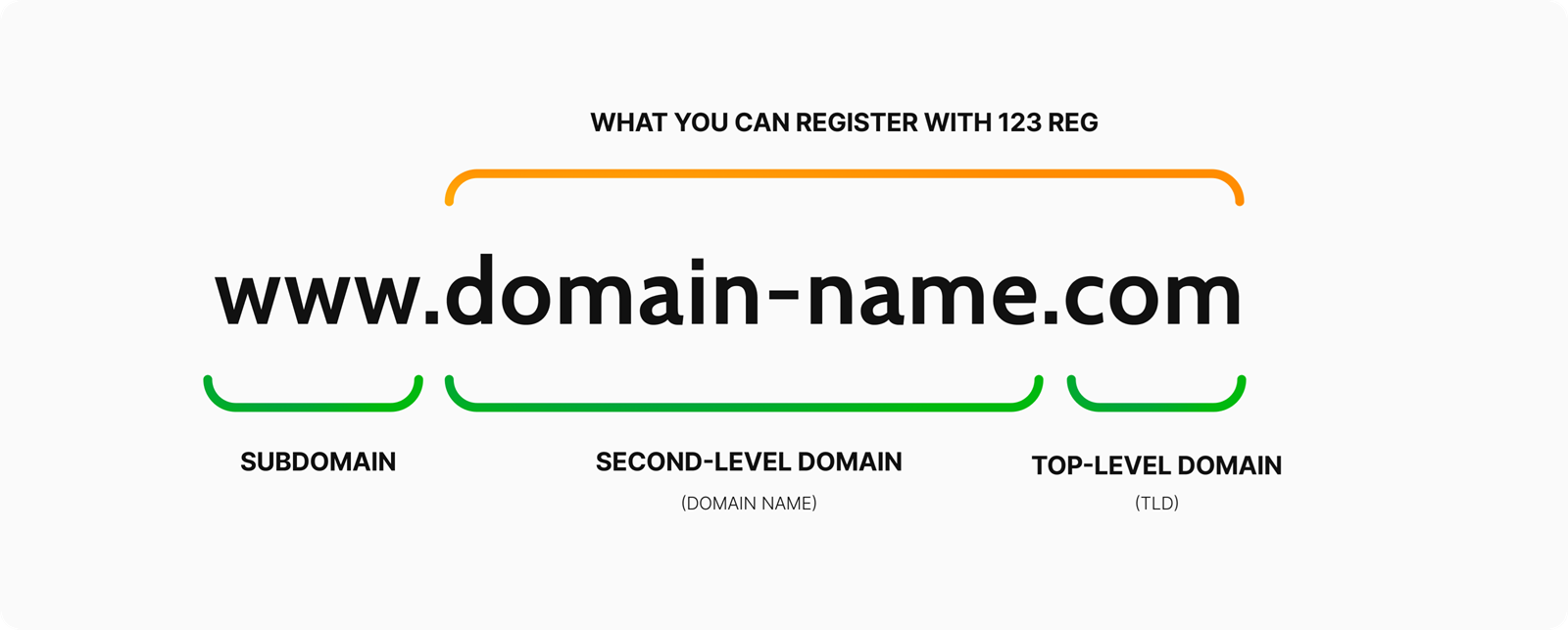
Choosing the right domain can also help people remember your business, whether you opt for a familiar ending like .co.uk or .com, or something more niche to match what you do (like .studio or .expert) or where you’re located (like .london or .wales).
That domain can also be used to create a professional email address for your business, like hello@your-big-idea.co.uk.
A trusted domain registrar like 123 Reg can help you find the right domain and get started.
See also: What is a Domain Name? A Beginner’s Guide to Domains
How do you buy your first domain name?
Getting your first domain name is easier than you might think. Simply search for the name you want, check it’s available, choose your ending, and check out.
One of the best things about buying through us is that you’re spoiled for choice: with 400+ domain endings to pick from, whether that’s a classic .co.uk or something more specific (or fun!)
For more, check out: How Much Does a Website Cost in the UK? Less Than You Think!
Why does the price change after your first year?
If you’ve already got a domain, you may have noticed your renewal price looks a bit different to what you paid when you first bought it. That’s completely normal, and it’s worth understanding why.
What introductory pricing actually means
Most registrars, including 123 Reg, offer domains at a discounted price for your first year. It’s designed to lower the barrier to getting your idea online, so you can focus your budget on building your business rather than the cost of claiming your name.
It’s like the sort of introductory offer you’d see with a lot of subscription services: a helping hand to get started, with the standard price kicking in once you’re up and running.
What you’re paying for once that first year is up
Once your first year is up, your domain simply moves to its standard renewal price. Think of it less as a one-off purchase and more like a subscription. The renewal fee should cover keeping your domain registered, secure, and pointed at your website, year after year.
How much can you expect to pay when you renew?
Renewal prices vary depending on the domain ending you’ve chosen, so it’s worth knowing roughly what to expect.
Some domain endings are cheaper to renew than others, and promotional first-year prices don’t always reflect the standard renewal cost.
Typical renewal prices by extension
Here’s a rough idea of what you might pay to renew some of the most popular domain endings:
✓ .co.uk — typically one of the more affordable endings to renew
✓ .com — a popular choice worldwide, with renewal pricing to match its popularity
✓ .uk — a great alternative to .co.uk, often similarly priced
✓ .org — a popular pick for charities and organisations
For more, check out: How to Choose the Best Domain Ending in 2026
Can a multi-year renewal save you money?
If you know you’ll be keeping your domain for the long haul, registering it for two, three or even five years at a time can be a convenient option. It means fewer renewals to think about and can give you one less thing to keep track of.
The exact options depend on your domain ending. Some extensions have a minimum registration period of two years, while many popular extensions let you register or renew for up to 10 years at a time.
A longer registration doesn’t always mean a lower overall price, but it can be a useful option if you’re confident you’ll be keeping your domain for years to come.
Can you buy a domain name forever?
Not quite. Domain names are registered for a set period, so even if you choose the longest available term, you’ll need to renew your domain when that period ends to keep it.
The good news is that you can simply keep renewing your domain for as long as you need it.
If you’re worried about accidentally letting your domain expire, Domain Ownership Protection from 123 Reg gives you an extra safety net to protect against domain loss and help keep your domain yours.
See also: The Cheapest UK Domain Registrars Compared (2026)
What else can affect your renewal cost?
Alongside the standard renewal fee, there are a few extras that might show up on your invoice. It’s worth knowing what they’re for, so nothing feels like a surprise.
Extras bundled in with your domain
If you picked up any extras when you first bought your domain, such as a mailbox, an SSL certificate or a hosting plan, these may renew alongside it. It’s always worth having a quick look at what’s included in your renewal, so you know exactly what you’re paying for and can decide what’s still useful to you.
With most annual 123 Reg hosting plans, including Website Builder and Managed WordPress Hosting, you get a domain name free for the first year. So if you’re setting up a website anyway, it’s well worth choosing a plan that includes one rather than buying a domain separately.
Domain privacy protection
When you register a domain, certain contact details are required by the domain registry, and without protection, some of this information can be publicly visible. Domain privacy protection keeps your personal details out of the public WHOIS record, which is why many domain owners choose to add it to their renewal.
See also: What is WHOIS?
How can you get the best value when it’s time to renew?
A few small habits can make sure you’re always getting the most out of your domain, without any last-minute stress.
Renewing early
You don’t have to wait until your renewal date is looming. Renewing a little early means you can plan the cost in ahead of time, and gives you peace of mind that your domain — and everything tied to it, like your email and website — stays live without a break.
Choosing a longer term upfront
As mentioned earlier, locking in two, three, or five years at once can work out better value overall, and means fewer renewal dates to keep track of.
Keeping an eye out for loyalty offers
123 Reg regularly runs offers for existing customers, so it’s always worth having a quick look in your account before you pay full price — you might find a better deal is already available to you.
✓ Renew early — so there’s no last-minute rush
✓ Lock in a longer term — for better value and fewer renewal dates
✓ Turn on auto-renew — so your domain is never at risk of lapsing
✓ Watch for loyalty offers — a better deal might already be waiting for you
What should you do if you forget to renew?
Life gets busy, and it’s easy for a renewal date to slip by. The good news is that forgetting doesn’t necessarily mean losing your domain straight away.
What happens if you miss your renewal date?
Most registrars, including 123 Reg, offer a grace period after your domain expires: a window of time where you can still renew it before it’s released back on the market.
During this period, your website and email may stop working even though the domain is technically still yours, so it’s best not to let things run right up to the deadline. How long you’ve got varies by registrar and domain ending, so it’s worth checking the specifics for yours.
Renewing on time, or keeping auto-renew, means you never have to think about it at all.
How to get your domain back if it lapses
If you’re within the grace period, simply log in and renew as normal to get everything back up and running. If it passes into a later expiry stage, it may cost a bit more to reclaim, or in some cases become available for someone else to register, so it’s always best to renew sooner rather than later if you can!
How do you renew your domain with 123-reg?
Renewing your domain with 123 Reg is easy, and there are a couple of ways to make sure it never slips through the net.
Turn on auto-renew
The simplest option is to switch on auto-renew from your account. Once it’s on, your domain renews automatically each year (or however often you choose).
You can check your renewal dates, update your payment details, and manually renew any time from your 123 Reg Control Panel.
Domain Ownership Protection
For extra peace of mind, 123 Reg also offers Domain Ownership Protection. If your debit or credit card happens to expire around your domain’s renewal date, we’ll hold onto your domain for an extra 90 days, giving you plenty of time to update your payment details without any risk of losing it.
It’s one more way to make sure your domain stays exactly where it belongs: with you.
Learn more about Domain Ownership Protection

Domain Renewal FAQs
Why is my domain renewal more expensive than my first year?
It’s not a trick, we promise! Most registrars offer domains at a discounted price for that first year, just to make it easy and affordable to get started. After that, your domain simply moves to its standard renewal price, which keeps it registered, secure, and pointed at your website.
How much does it cost to renew a .co.uk domain?
It depends a bit on your registrar, but .co.uk tends to be one of the more wallet-friendly endings to renew. And with 400+ domain endings to choose from at 123 Reg, there’s plenty of room to find something that suits your budget too.
What happens if I don’t renew my domain in time?
Don’t panic — most registrars, 123 Reg included, give you a grace period after your domain expires before it’s released. That said, it’s always best to renew sooner rather than later, as it can get pricier (or the domain could become available to someone else) the longer it’s left.
Can I renew my domain for multiple years at once?
You can, and it’s often a smart move. Renewing for two, three, or even five years upfront can work out better value, plus it’s one less date you need to remember each year.
Does renewing my domain also renew my email and website?
It might do! If you’ve bundled in extras like email hosting, an SSL certificate, or a website plan, these can renew alongside your domain. Worth a quick check of what’s included so nothing on your invoice comes as a surprise.
How do I stop my domain from expiring by accident?
The easiest fix is to switch on auto-renew in your 123 Reg account. Once it’s on, you genuinely never have to think about it again — your domain just renews itself each year.
How do I buy a domain name if I don’t have one yet?
It’s easier than you’d think. Just search for the name you want, check it’s free, pick your ending from 123 Reg’s 400+ options, and check out — you could be up and running in a few minutes.
Can I get a domain name for free?
You can, yes! Most annual 123 Reg hosting plans, including Website Builder and Managed WordPress Hosting, come with a domain name free for the first year. It’s a nice little shortcut if you’re setting up a website anyway, as you won’t need to buy your domain and hosting separately.
For more, check out: How To Get a Free Domain Name