

Starting an online business today? It’s easier than it’s ever been. You can get your own domain in a few clicks, have a website live by the afternoon, and, for many business starters, that’s where the “official” part of setting up may feel like it ends.
Buying your-big-idea.co.uk gives you a spot on the web, but it doesn’t usually give you legal rights to that name if someone else starts trading under something similar. A domain isn’t a trade mark, and registering isn’t the same thing as registering a business.
Applying for a trade mark in the UK is easier than it sounds, and it can help protect the name, logo or slogan you’ve worked hard to build.
Key takeaways
- ☑︎ You don’t need a trade mark to start trading. But registering one can help protect your brand as it grows.
- ☑︎ Buying a domain is easy, but it isn’t a trade mark. It secures your spot online, not any legal rights over that name.
- ☑︎ Check before you apply. Search existing trade marks to make sure your brand name is available.
- ☑︎ Choose the right classes. These cover the types of goods and services your trade mark will apply to.
- ☑︎ Matching your business name, trade mark, domain and email address helps build a stronger brand.
What is a trade mark?
A trade mark (or “trademark” in US English) is a sign that helps customers distinguish one business’s goods or services from another’s.
It could be:
✓ A business or product name
✓ A logo or symbol
✓ A slogan
✓ A combination of words and imagery (as seen on many logos)
✓ In some cases, even a distinctive shape, colour or sound
Trade mark applications are becoming ever more common in the UK. In 2025, the Intellectual Property Office (IPO) received more than 203,000 applications and registered around 177,000 trade marks — record figures!
So, do I need a trade mark for my business?
For many small businesses, the most important thing to protect is the name customers see and remember.
A logo may change over time, but the words used in your website address, email address, social profiles and marketing may remain the same.
A trade mark doesn’t automatically protect every use of a word in every industry. Your application must specify the goods or services you want to use it with, which is why choosing the right classes is an important part of the process.
If you’re still testing an idea with a handful of sales, a trade mark might not be your first priority. But once you’re relying on your name to bring customers back, whether through repeat orders, word of mouth, or a growing presence online, it can stop someone else cashing in on the reputation you’ve worked hard to build.
See also: Domain Names and Trade Marks – A Guide for Your Online Brand
Why should a small business register a trade mark?
A trade mark can help turn your chosen name into a more protectable business asset. It may make it easier to challenge another business whose branding is confusingly similar, subject to the scope of your registration and the circumstances of the dispute.
Registering early can be especially useful if you’re planning to invest in:
☐ A website and online shop
☐ Printed packaging or signage
☐ Paid advertising
☐ Social media campaigns
☐ Products sold through retailers or marketplaces
☐ A domain portfolio and branded email addresses
It’s worth checking your chosen name before spending money on any of this. Discovering a conflict after you’ve printed thousands of labels or built up brand awareness can be costly and disruptive.
A domain can be part of this early planning too. You might search for the matching .co.uk, .uk and .com addresses, along with suitable alternatives, while carrying out your trade mark checks.
For example, a domain might be unregistered while a similar trade mark is already protected (or vice versa).
Trade mark vs company name vs domain name
| Registration | What it gives you |
|---|---|
| Trade mark | Protection for a brand in relation to specified goods or services |
| Company name | Registration of a legal company in the UK with Companies House |
| Domain name | Your unique address online — like your-big-idea.co.uk |
See also: How to Buy and Register a Domain Name in the UK
What can (and can’t) be trade marked?
Not every name or logo qualifies. Generally, UKIPO is looking for something distinctive: a mark that clearly points to your business and doesn’t simply describe what you sell.
Invented or distinctive names tend to be easier to register. Think “Google” rather than “Online Search Company”, or “Spotify” rather than “Music Streaming Service”.
That same instinct is worth applying when you’re buying a domain name. The more distinctive it is, the easier it is to protect, and the easier it is for customers to find and remember.
What tends to get refused is anything too generic to own, like “Fresh Bakery” for a bakery, or a mark that’s too close to an existing UK registered trade mark. Offensive, misleading, or deceptive marks won’t get through either.
A quick gut check: would any competitor reasonably need to use the same words just to describe their own business? If so, it’s unlikely to pass.
Before you apply: choose and check your trade mark
Before filling in an application, decide what you want to protect and do some research first. A little homework can save you a rejected application and a wasted fee later on.
Choose what to protect
You can apply to protect different parts of your brand, including:
☐ A word mark: protects the words themselves, rather than a particular typeface or design. This can be useful if you expect to use your business name across your website, packaging, email and advertising.
☐ A logo or figurative mark: protects the specific visual design you submit.
☐ A slogan or product name: you can also protect a distinctive slogan, product or service name, or sub-brand.
Think about how your business could develop over the next few years. The mark you register should reflect the brand you genuinely intend to build, rather than something you might soon change.
Search for existing trade marks
One of the most important steps is checking before you apply. UKIPO’s database is free to search, and lets you look for existing marks by words, owners and classes.
Start with your exact name, then check for:
☐ Similar spellings, plurals and word combinations
☐ Names that sound alike or create a similar overall impression
☐ Similar marks covering the same or related goods and services
Don’t only look for an exact match. A different spelling can still cause a problem if customers could confuse the two brands.
It’s also worth checking Companies House for similar company names, as well as the wider web, social platforms and marketplaces.
Check that domain name, too!
Your trade mark, business name and domain name don’t have to be identical, but having them line up can help create a stronger, more recognisable brand.
Check domain availability while you’re doing your trade mark research, rather than after you’ve committed to a name. If your ideal .co.uk or .com is already taken, you could reconsider the name or explore one of the hundreds of other domain endings available.
Not sure where to start? 123 Reg’s AI Domain Search can suggest business names and domain endings based on a description of your idea.
Have you registered your business yet?
Buying a domain and putting up a website is the easy part these days. Pick a name, check it’s free, and you could be trading online before the kettle’s boiled. But at some point, usually not long after those first few sales start coming in, the admin catches up with you.
A domain and trade mark are part of your brand, but neither one registers your business or sorts out your tax. You’ll still need to decide whether to trade as a sole trader or limited company, and register in the right way.
For more, check out: Sole Trader vs Limited Company – Which Is Right for Your Business?
Choosing the right trade mark class
When you apply, you’re not just registering a name generally; you’re registering that name for specific types of goods or services, grouped into what’s called the Nice Classification.
There are 45 classes in total, covering everything from clothing and food to software and consultancy services.
This matters because your trade mark only covers the goods or services you choose. For example, if you register “Acorn” for clothing, your trade mark won’t automatically stop another business from using “Acorn” for restaurant services.
So it’s worth thinking about what your business does now, and where it might go in the future, before choosing your class or classes.
How much does it cost to trade mark a business name in the UK?
The UK Intellectual Property Office (UKIPO) charges per class. Applying online is cheaper than applying by post.
As of April 2026:
UKIPO trade mark application fees*
| Application route | First class | Each additional class |
|---|---|---|
| Standard online application | £205 | £60 |
| Paper application | £250 | £60 |
| Right Start (paid in two stages) | £250 total | £60 total |
*The standard online fee is £200, with a £30 discount when you apply online and pay in full.
With Right Start, you pay £100 upfront (plus £25 per additional class). If you decide to go ahead, you’ll then pay the remaining balance. If you don’t, you can let the application lapse without paying the rest.
If you use a trade mark attorney or solicitor, you’ll also pay their fees. These vary depending on the work involved and whether anyone challenges your application.
Fees can change, so check the latest UKIPO application services and fees before you apply.
How to apply for a trade mark in the UK?
Once you’ve done your homework and chosen your class or classes, you can apply online through UKIPO.
Please note: before applying, it’s worth reading the official GOV.UK guidance on what you need to do before registering a trade mark, so you don’t miss an important step.
- Search the UKIPO database, here. Run a final check of the UKIPO database to confirm nothing’s changed since your earlier research.
- Choose your mark and class(es). Decide exactly how your name, logo, or slogan will appear, and confirm which class or classes you need.
- Apply online. The application form asks for your mark, your chosen class(es), and your business details.
- Pay the fee. UKIPO charges per class, with online applications typically working out cheaper than paper ones.
- Examination. UKIPO checks your application meets the rules and doesn’t clash with existing UK trade marks. This usually takes a few weeks.
- Publication and opposition period. If your application passes examination, it’s published for two months, during which other trade mark holders can object if they believe it conflicts with their own.
- Registration. If nobody objects, which is the case for most small business applications, your trade mark is registered and protected for 10 years, renewable indefinitely after that.
How long does a trade mark application take?
All told, most simple UK trade mark applications take around four months from start to finish, although it can take longer if there are objections or other issues.
See also: How to Find a VAT Number by Company Name
What happens if someone objects to my trade mark?
For the average small business, this is the exception rather than the rule, but it’s worth knowing what it looks like.
During the two-month publication period, existing trade mark holders can file an opposition if they believe your mark is too close to theirs. If that happens, you’ll usually have the chance to respond, negotiate, or in some cases amend your application.
It can feel daunting, but it doesn’t automatically mean your application fails. If you do face an opposition, it’s a good time to speak to a trade mark attorney or solicitor rather than handling it alone.
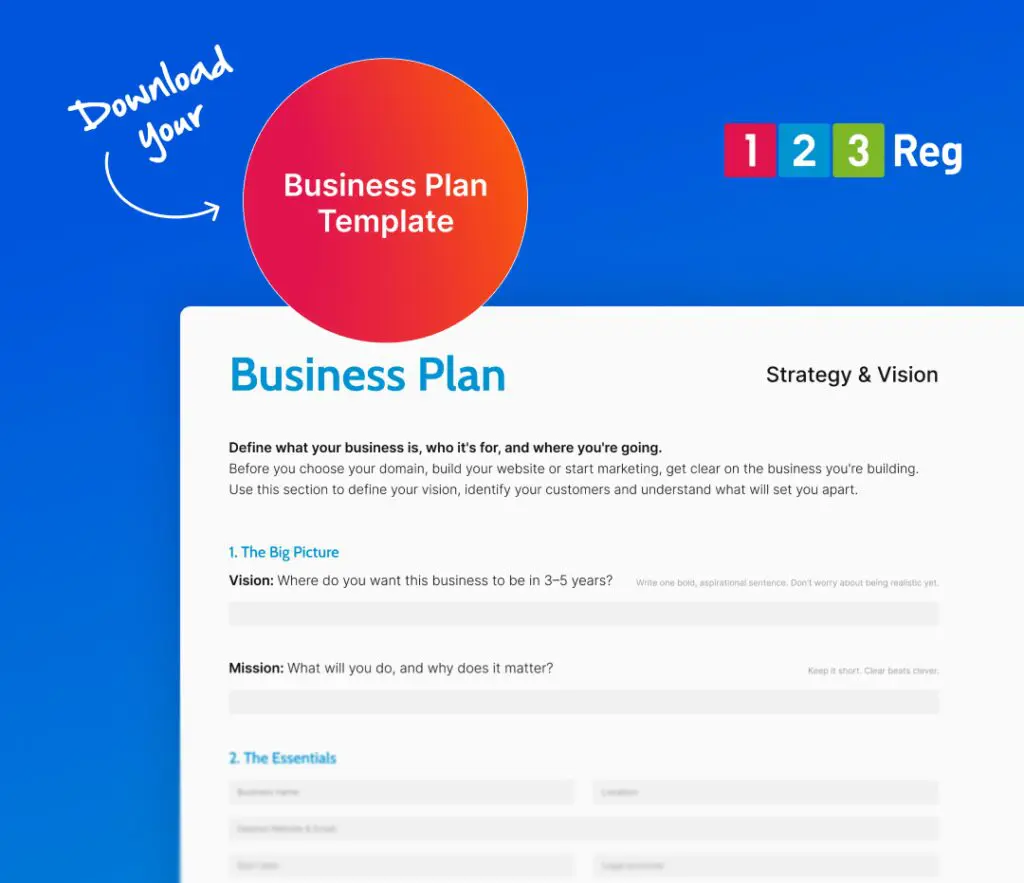
Our Free Business Plan Template helps you map out your next steps, so you start with a clear plan — download it here.
Keeping your brand in sync
Your trade mark, trade name and domain name are all separate registrations, and none of them automatically protects the others. But when they line up, customers can find the right business online, your brand looks consistent across different channels, and there’s less chance of confusion with another business using a similar name.
If you’ve just filed a trade mark application, it’s a good time to check the matching domain names too, including obvious variations and alternative endings, so nobody else gets them first.
Don’t forget your custom email address
Got your domain? Complete your brand with a custom email address that matches it, like hello@your-big-idea.co.uk. 123 Reg Professional Email gives you a branded inbox to match your domain, so you can start sending the right message.

Wrap up
A trade mark protects your name and reputation. A domain name gives you a home online. Together, alongside a registered company name where applicable, they can help build a stronger, more protected brand that’s harder for others to imitate or create confusion with.
If you haven’t already secured the domain to match your brand, now’s a good time to check what’s available. 123 Reg’s AI Domain Search can help you find the right name and ending in seconds.

FAQ
How long does it take to register a trade mark?
If there are no issues with your application and nobody opposes it, registration usually takes around 3 to 4 months from application. The Intellectual Property Office (IPO) states your trade mark should be registered around 10 weeks after it’s published, as long as nobody opposes it. It can take longer if the IPO raises objections or someone opposes your application.
Be sure to read the full GOV.UK guidance on how to register for trade marks.
Do I need a solicitor or trade mark attorney to apply?
A registered trade mark attorney is a qualified and regulated professional. Many small businesses apply themselves when their name is distinctive and the relevant class is clear, but professional help can be useful if you find a similar mark, want protection in several countries or receive an objection.
What happens if someone opposes my trade mark application?
Your application is published in the Trade Marks Journal, giving others the opportunity to oppose it. If someone opposes your application, the IPO will tell you. You can discuss the issue with the other party, withdraw your application or defend it. Consider seeking professional advice before deciding how to respond.
How long does a registered trade mark last?
A registered UK trade mark lasts for 10 years and can usually be renewed afterwards. Make a note of the renewal date so your protection doesn’t lapse unexpectedly.
Can I use the ® symbol after I apply?
Not yet. The ® symbol is for registered trade marks, so wait until your application has been approved; you can use ™ while you’re claiming an unregistered mark.
Does registering a trade mark protect my domain name?
No, they do different jobs. A trade mark protects your brand in specific areas, while a domain gives you an online address, so check both before settling on a business name.