

Setting up a website can feel like learning a whole new language. One minute you’re excited about that great new domain name, the next you’re looking at words like DNS, SSL, and PHP, trying to work out if they’re website tools or random letters someone spilled across the keyboard.
This A–Z guide to web terms is here to cut through the jargon and explain all in plain English, so you can make confident choices for your business.
You don’t need to know every acronym to take your idea online. What matters is the basics: your Domain Name is your website’s address, and hosting is the digital space where it lives. Add a Professional Email Address to look the part, and pick a tool like Website Builder or WordPress to bring your vision to life — everything you need to get online and grow.
A
Analytics
What is analytics?
Analytics is about tracking and understanding what’s happening on your website. Tools like Google Analytics show how many visitors you get, which pages they view, how long they stay, and where they come from. For online business owners, analytics turn website activity into useful insights you can then act on.
Why it matters
Web analytics let you see whether your marketing is actually working. When you understand visitor behaviour — what draws them in, what makes them leave, and what makes them click — you can make smarter decisions about your site design, content, and advertising.
For more, check out: Google Analytics: A Guide For Your Online Business
B
Backup
What is a Backup?
Backing up means saving a copy of your website files, content, and/or databases. So if disaster strikes (like a hack or accidental delete) you can restore everything instead of starting over.
Why it matters
Regular backups give you peace of mind. 123 Reg has automated backup options with certain plans just to help keep your data safe.
Bandwidth
What is bandwidth?
Bandwidth measures the data transferred between your website and visitors each month.
Why it matters
Having enough bandwidth keeps your site reliable and responsive during visitor surges. It’s like the pipe size for your site’s traffic — at home it affects streaming speed, for business it handles peak demand like Christmas rushes.
Bounce Rate
What is bounce rate?
Bounce Rate is the percentage of visitors who land on one page and leave without clicking anything else or exploring further. It’s one way to measure engagement—how well your content holds attention and encourages people to keep browsing.
Why it matters
A high bounce rate often means your page isn’t matching visitor expectations. You can lower your bounce rate by improving headlines, visuals, load speed, and layout to make the experience more engaging and keep visitors on site longer.
C
Call to Action (CTA)
What is a CTA?
A Call to Action (CTA) tells visitors what to do next, like “Buy now” or “Sign up.”
On a website or email, it’s often a clear sentence with an anchor link or a button (CTA button) that stands out and nudges people to take the next step.
Why it matters
Strong CTAs guide visitors to your goals, whether that’s purchases or enquiries or something else. Clear, punchy messages can turn browsers into buyers and keeps visitors engaged.
CMS
What is a CMS?
A CMS, or Content Management System, is software that lets users (especially teams) create, edit, and manage content on a website without needing to code.
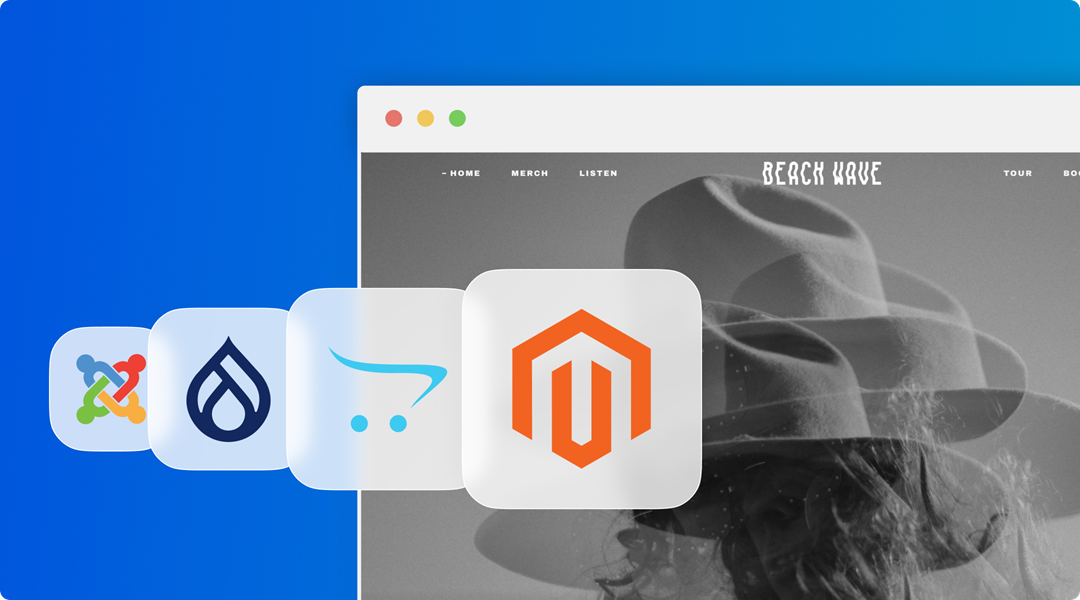
The most popular CMS in the world is WordPress, which powers millions of sites. While WordPress itself is free, Managed WordPress Hosting is what keeps it fast, secure and online 24/7.
Why it matters
CMS platforms make it easy for teams to update sites and work together. Without one, you’d probably need a whole IT team or outsource the work.
Cookies
What are cookies?
Cookies are small files saved on a visitor’s device that help websites remember things like login details, preferences, or what’s in a shopping cart.
Why it matters
They make browsing more personalised for users. By law, if your site uses cookies, you need a cookie consent banner and must mention them in your privacy policy — but get the balance right, as intrusive banners can lead to customers bouncing.
For more, check out: Cookies and Cache: What They Are and How to Manage Them
cPanel
What is cPanel?
cPanel is the main dashboard for Web Hosting where you manage emails, files, backups, databases, and security for web hosting plans.
Why it matters
It’s your site’s technical control centre in one place. Website Builder users skip cPanel entirely — everything’s handled in a simple visual Control Panel instead.
D
Domain Name
What is a domain name?
A domain name is your street address on the internet — it’s what people type into their browser to visit your website. It’s also how they remember you, share you, and know they’ve landed on the right site.
Behind the scenes, computers use long numeric IP addresses to identify servers, but DNS acts like a phonebook that matches your friendly domain name to the right web address so visitors land in the right place. For a small business, a short, on‑brand, easy‑to‑spell domain name is one of the most important branding decisions you’ll make online.
Why it matters
Your domain name is your digital shopfront, the backbone of your email addresses, and a key part of your brand identity all in one. A clear, memorable, relevant domain makes it easier for customers to find you, share you, and trust they’re on the right site.
With 123 Reg, you can get a domain from as little as 1p for the first year, and choose from over 400 domain endings to match your brand and audience.
Domain Ending / Domain Extension
What is a domain extension?
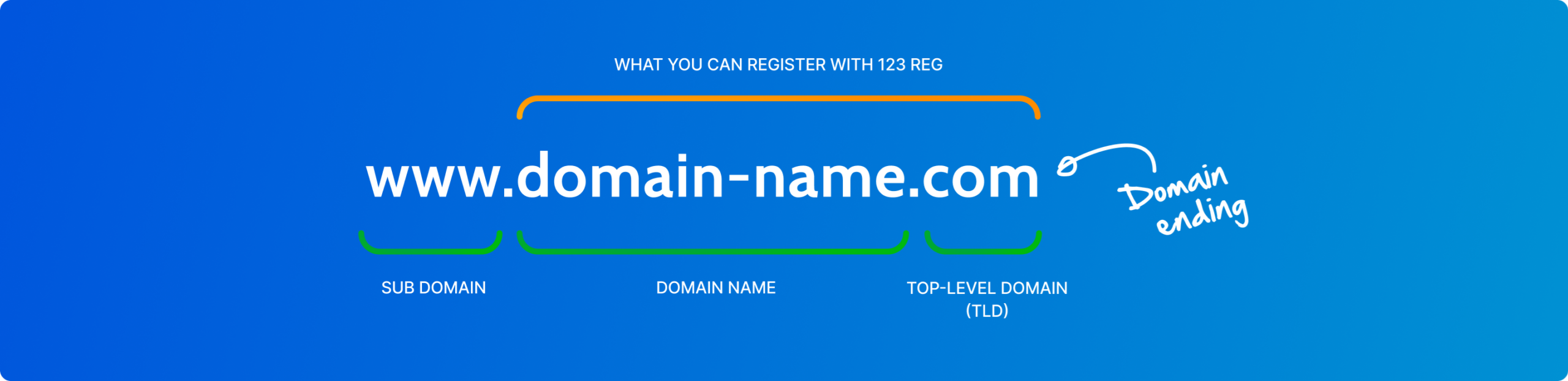
A domain extension is the part after the final dot in a web address — like .com, .co.uk or .shop. It’s also called a top-level domain (TLD).
Why it matters
TLDs give a quick hint about your site, what it’s for or where you’re based. Think .co.uk for UK businesses, .org for non-profits, .shop for online stores. Pick one that fits your brand and helps the right people find you. With 123 Reg, you can register hundreds of options to match your brand and audience.
See also: How to Choose the Best Domain Ending and Why Short Domain Extensions are Better
DOP
What is a domain extension?
DOP (Domain Ownership Protection) hides your personal contact details in WHOIS database — a public database that shows who owns a domain name — and locks your domain so it can’t be moved or changed without your permission.
Why it matters
It helps protect your domain from hackers, spam, and unauthorised transfers, keeps your personal information private, and gives you full control over who can make changes to your domain.
Learn more about 123 Reg Domain Ownership Protection
DNS
What is DNS?
DNS stands for Domain Name System. It’s the internet’s address book that connects your domain name (like yourbusiness.co.uk) to the server where your site lives. You’ll use DNS when pointing a domain to new hosting or setting up email, ensuring visitors always reach the right place.
Why it matters
Proper DNS setup means your website and email work flawlessly from day one. With 123 Reg, our easy domain management tools make it simple to manage records and avoid downtime when pointing to new websites or services.
See also: DNS – How Do Websites Get Found Online?
E
Email Hosting
What is email hosting?
Email hosting powers your professional email address — like info@yourbusiness.co.uk — tied to your own domain name. It gives you a dedicated, branded inbox that matches your website, instead of relying on free services like Gmail or Outlook.
Why it matters
A custom email makes your business look more professional and trustworthy — customers know they’re dealing with a real company. It often comes with built-in security, spam filtering, and easy access across your phone, tablet, or computer.
With 123 Reg, it’s easy to set up a custom professional email address with your own domain name, and many hosting plans include email hosting as part of the package.
See also: Why Every Business Needs a Professional Email Address and Half Typed, Fully Brilliant: Professional Email Powered by Titan

Engagement
What is engagement?
Engagement measures how visitors interact with your website. It includes actions like clicking links, reading content, filling out forms, or watching videos. High engagement usually means your site is interesting and useful to your visitors.
Why it matters
Tracking how “engaged” your visitors are helps you understand which pages, products, or content are working the best. These insights can guide improvements and help your site meet business goals.
See also: Google Analytics: A Guide For Your Online Business
F
Favicon
What is a favicon?
The tiny icon that appears in the browser tab next to your site name.
Why it matters
Even though it’s small, it helps your brand stand out and makes your site easier to recognise in tabs or bookmarks.
Forwarding
What is forwarding?
Forwarding automatically reroutes traffic or messages from one place to another. Domain forwarding points your domain (like oldsite.co.uk) to a new website, while email forwarding sends messages from one address (e.g., sales@yourdomain.co.uk) to another inbox.
Why it matters
It keeps things simple — catch emails during transitions or direct visitors without losing them. Both domain and email forwarding are easy to set up in your 123 Reg Control Panel.
See also: Make Every Domain Count – What is Domain Forwarding?
G
What is Google?
Google is the world’s most popular search engine and by far the dominant one in the UK, where it handles around nine out of every ten searches across phones, tablets and computers. When people want to find a local plumber, shop, restaurant or service, they almost always type their query into Google first.
Why it matters
Google is where most potential customers start their search, so getting seen there is how most small businesses get found online. Focus on SEO, Google Business Profile for local visibility, and optimised content for AI Overviews to stay ahead.
Google Business Profile
What is your Google Business Profile?
Google Business Profile (formerly Google My Business) is a free tool from Google that lets you create and manage how your business appears on Google Search and Google Maps. It shows important details such as your business name, address, phone number, opening hours, website link, and photos—all in one convenient place when people search for your business or services like yours.
Why it matters
Having a complete Google Business Profile helps your business stand out locally and builds trust with potential customers. It improves your visibility in local search results and on Maps, so people nearby can easily find and contact you. Keeping your profile up to date (with posts, reviews, and new photos) can boost engagement for your brand.
See also: Local SEO in 10: How Do I Get My Business Found Online?
H
Hosting
What is hosting?
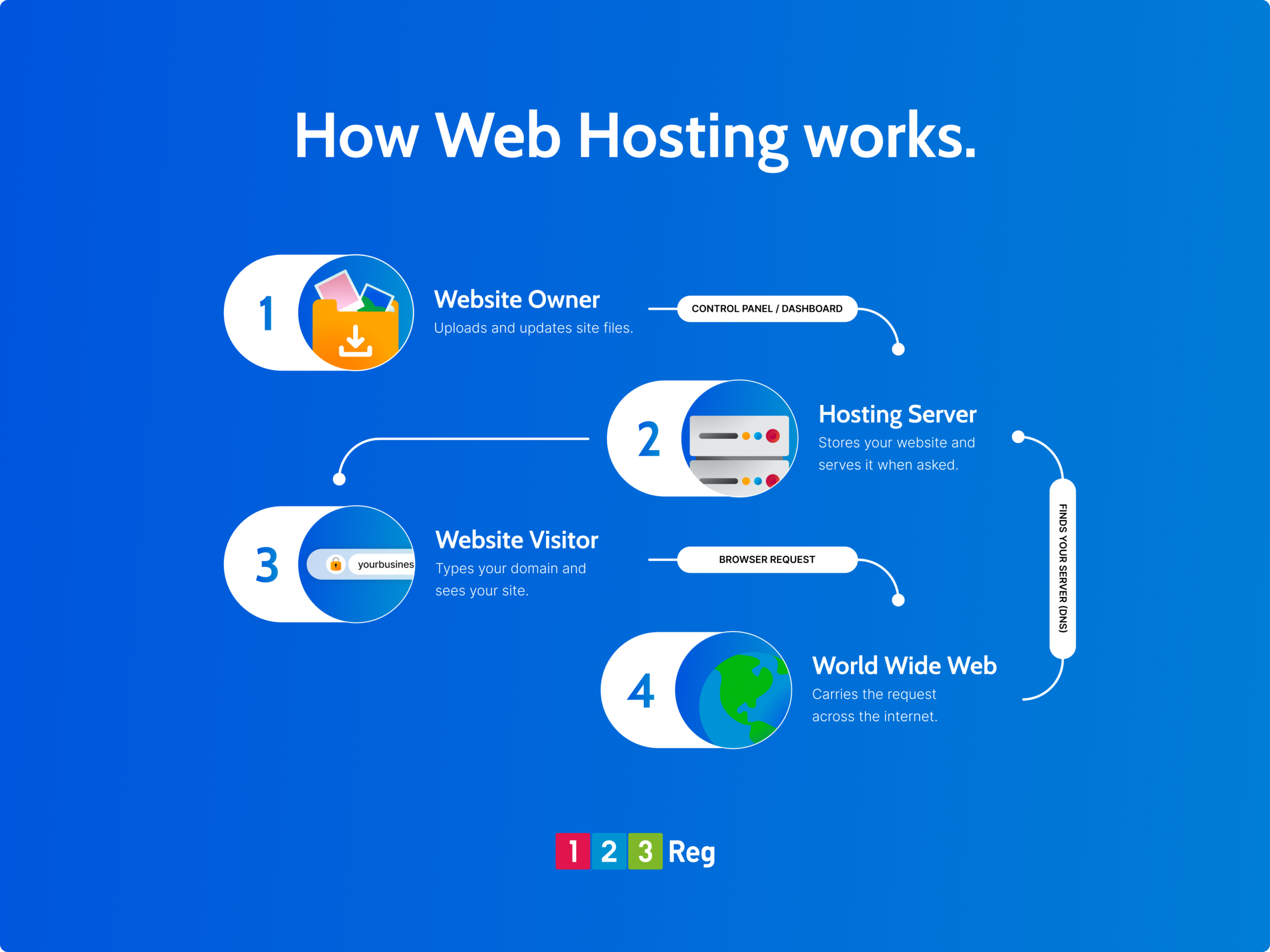
Hosting is the service that stores all the files, images, and code that make up your website and keeps them accessible to visitors around the clock. Every website you visit lives on a server — the always-connected computer that “hosts” the site so anyone can reach it from anywhere. You can think of hosting like renting space in a digital shop‑front, where your website is always open and ready for business.
Why it matters
Without hosting, your website wouldn’t appear online for people to find. The type of hosting you choose affects how reliable your site is, how it performs as visitor numbers grow, and how professional your brand appears to potential customers. Picking the right plan gives your business a solid foundation, helping you deliver a consistent experience every time someone visits your site.
HTML
What is HTML?
HTML stands for HyperText Markup Language. It’s the basic language web pages are written in, created by Sir Tim Berners-Lee in 1991 as the foundation of the web.
Why it matters
Knowing what HTML is helps you understand how websites are structured and why certain changes affect your pages. Fortunately, you don’t really need to know HTML when using 123 Reg Website Builder or a Content Management System (CMS) like WordPress.
HTTP / HTTPS
What is HTTP/HTTPS?
HTTP and HTTPS are the protocols that tell browsers how to load your website — HTTP is the basic version, HTTPS is the upgraded one that encrypts data between visitors and your site, showing a padlock in the address bar. The “S” just stands for “Secure”.
Why it matters
HTTPS is now essential for all business sites, protecting forms, logins, and payments while building customer trust. It requires an SSL Certificate, which comes free and automatic with most 123 Reg annual hosting plans. Without it, your site may not rank well on Google.
I
IP Address
What is an IP address?
An IP address is a unique string of numbers like a telephone number (eg, 192.168.1.1) that identifies a server on the internet.
The Domain Name System (DNS) hides this behind your friendly domain name (like 123-reg.co.uk) so visitors don’t need to remember it. Basically this is what buying a great domain name is all about!
Why it matters
IP addresses are how computers locate each other online — more or less like telephone numbers. The DNS system works in the background to turn these numbers into memorable and brandable domain names you can easily say, type, and remember.
J
JavaScript
What is JavaScript?
JavaScript is a programming language that makes websites interactive — think drop-down menus, image sliders, pop-ups, and smooth animations.
Why it matters
JavaScript can make a website feel responsive, modern, funky. But with Website Builder or Managed WordPress Hosting, things like effects and animations within themes are handled for you, so you don’t need to worry about it.
K
Keywords
What are keywords?
Keywords are the words or phrases people type into search engines to find businesses like yours — the foundation of SEO and content planning.
‘Short-tail keywords’ are brief and competitive (like “Dorset B&B”), while ‘long-tail keywords’ are specific and can be easier to rank for (like “Dog-friendly B&B in Dorset with seaviews”)
Why it matters
Choosing the right keywords helps your site appear for the searches your customers actually use, improving your visibility and sending more traffic (and customers) your way.
See also: Local SEO in 10: How Do I Get My Business Found Online?
Keyword research
What is keyword research?
Keyword research is finding the words and phrases people actually type into search engines when looking for businesses like yours. It helps you create content that matches real customer searches.
Why it matters
Targeting the right keywords boosts your search visibility and attracts the right visitors. Google Keyword Planner is one free tool to get you started.
L
Landing Page
What is a landing page?
A landing page is a focused web page designed to get visitors to take one specific action, like signing up or buying — often the destination for Pay-Per-Click (PPC)/Search Engine Marketing (SEM) campaigns.
Why it matters
A well‑built landing page boosts conversions by matching ad messaging with a clear offer and a simple call‑to‑action, helping you turn clicks from PPC and SEM into real leads or sales.
M
Malware
What is malware?
Malicious software that can infect websites, often through insecure plugins or weak passwords. It can damage your site or steal data.
Why it matters
Good hosting and security tools can detect and remove malware, keeping your site safe for you and your visitors.
See also: Website Security: How to Keep Your Business Safe Online
Meta tags
What are meta tags?
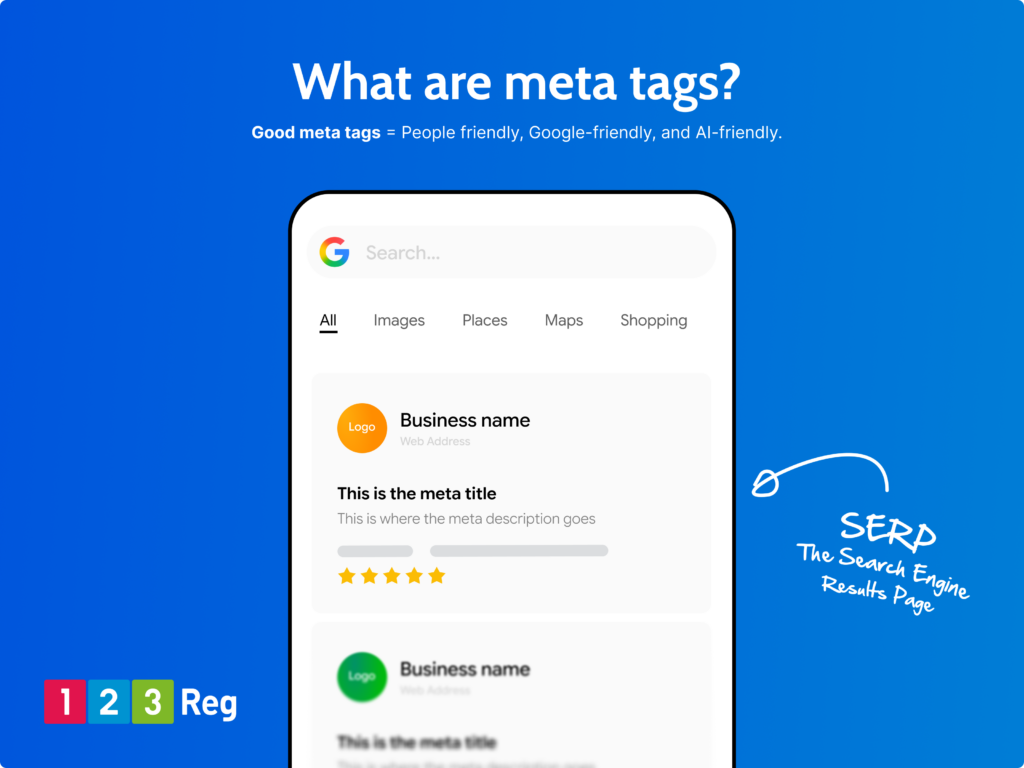
Meta tags are hidden bits of information on a page — like the meta title (the clickable headline in search results) and meta description (the short summary underneath) — that tell search engines and social media what your page is about. They don’t show up on the page visitors see.
Why it matters
Good meta tags make people more likely to click your page in search results and help your content look sharp when shared on social media. Generally, the meta title matters more for SEO than the description does. With Website Builder or SEO plugins for WordPress, they’re easy to customise.
Mobile-Friendly / Mobile Optimisation
What is mobile optimisation?
Mobile optimisation (related to responsive design) is about making sure your site looks and works great on phones and tablets, not just desktops. Responsive design automatically adjusts layouts, text, buttons, and images to fit any screen size perfectly.
Why it matters
Smartphones drive 75-78% of retail website visits and 67-75% of online orders in the UK, so an unoptimised site frustrates users, spikes bounce rates, and hurts your Google rankings. Luckily, with Website Builder and responsive WordPress themes, mobile optimisation is built-in and all taken care of for you.
See also: Why You Need a Mobile-Friendly Website (and How to Get One)
Microsoft 365 / M365
What is Microsoft 365 Email?
Microsoft 365 (formerly Office 365) is a business email service powered by Microsoft’s cloud-based email platform, which you can use to run your own custom domain email (like you@your-big-idea.co.uk).
M365 includes webmail, calendars, contacts, and attachments in one clean, business‑ready inbox. You can check your emails in your browser or sync everything with Microsoft Outlook — either for desktop or on the go.
Why it matters
Pick the right plan and you’ll get all the familiar tools, like Word, Excel and PowerPoint. You’ll also have built-in AI features, including Copilot, to help with everyday tasks, plus a range of useful add-ons like Microsoft Power BI, Microsoft Visio, and Microsoft Planner. To learn more, check out: More Than Email – M365 Add-Ons to Power Your Small Business
N
Nameservers
What are nameservers?
Nameservers are special servers in the DNS system — which translates IP addresses (like telephone numbers) into readable domain names. You change them when switching hosts to point your domain to the right place. See also: DNS
Why it matters
Nameservers ensure your domain points to the right hosting, so visitors can reach your website.
Navigation menu
What is navigation menu?
The links and menus that help visitors move around your site. Clear navigation makes your site easy to use and find information fast.
Why it matters
Good navigation improves user experience and keeps visitors engaged longer.
O
Off‑site backup
What is an off‑site backup?
A backup copy of files and content stored away from your main server.
Why it matters
If your hosting platform fails, you still have a safe copy of your website and data elsewhere. Some follow the 3-2-1 rule: 3 copies of data, on 2 different media, 1 stored off-site.
Famously, Pixar almost lost all of Toy Story 2 when their main server crashed — having just one off-site backup saved the day!
Online Store Builder
What is Online Store Builder?
An advanced version of Website Builder, Online Store Builder is specifically designed for creating professional ecommerce stores with integrated shopping carts, payment processing, and inventory management
Why it matters
You can build your own online shop that takes your presence further than a standard website: sell products securely, manage stock, and scale as orders grow.
Learn more about Online Store Builder
P
Pay Per Click (PPC)
What is PPC?
PPC (Pay Per Click) is online advertising where you only pay when someone clicks your ad — like in Google Ads at the top of search results (SERP). It drives targeted traffic straight to your site. You’ll also see PPC ads on Meta platforms like Facebook and Instagram, which you can manage with Meta Business Suite.
Why it matters
PPC puts you in front of the right customers instantly, while SEO takes time. Set a clear budget and goals to make every click count — perfect for promoting offers or driving sales.
PHP
What is PHP?
PHP is a programming language powering many CMS platforms like WordPress — it runs the code behind your site’s dynamic features. You won’t need to use it unless you want to.
What is PHP?
PHP is a programming language powering many CMS platforms like WordPress — it runs the code behind your site’s dynamic features.
Plugin / WordPress Plugin
What are plugins?
Plugins are add-ons you install on WordPress or similar CMS to add features — like contact forms, SEO tools, online shops, or security — without coding from scratch.
What is PHP?
They let you customise and extend your site easily. With thousands available (many free), plugins turn basic WordPress into a powerful business tool.
Premium Domain
What is a Premium Domain?
A domain that’s especially valuable because it’s short, easy to remember, brand-like, or contains a popular keyword (like a short .com). Premium Domains cost more initially and sometimes to renew, but can be worth it for many businesses.
Why it matters
A premium domain instantly strengthens your brand, builds trust, and makes your site unforgettable to customers.
Premium Hosting
What is Premium Hosting?
Premium Hosting is a higher-spec plan with more resources (CPU, RAM, storage), faster servers, better support, and extras like advanced security or automatic backups.
Why it matters
Busier, high-traffic sites like ecommerce stores or news portals demand smooth performance without slowdowns or crashes — Premium Hosting handles that load.
Professional Email
It’s the service powering branded addresses like info@yourbusiness.co.uk using your domain. See Email Hosting.
Q
Quota
What is quota?
Quota is the limit on disk space for your website files and emails. Hit the limit, and you won’t be able to upload new files or receive emails until you free up space or upgrade.
Why it matters
Watching your quota keeps your site and email running without hiccups. With 123 Reg plans, you get plenty of generous storage — it’s tough to hit the limit these days — but upgrading is easy if you need more.
R
Redirect
What is a redirect?
Automatically sends visitors from one URL to another. Useful if you rename a page or move to a new domain.
Why it matters
Redirects protect your SEO rankings and prevent “page not found” errors for visitors. With 123 Reg, you can easily set up redirects or forwarding right from your domain control panel. See also: Forwarding
Registrar / Domain Registrar
What is a registrar?
Think of a registrar as your domain’s official home base — the company where you register, renew, and manage your domain name. Often it’s the same place you host your website.
Why it matters
Your domain is like the front door to your online brand, so you want someone reliable keeping it safe and easy to manage. With a trusted registrar like 123 Reg, you can relax knowing your domain will stay active, secure, and totally under your control.

S
Search Engine Marketing (SEM)
What is SEM?
Search Engine Marketing (SEM) is how you promote your website on search engines using both paid ads (like PPC) and tactics to improve your visibility in search results. It brings together paid and organic strategies so you can show up exactly where your customers are searching.
Why it matters
SEM puts your business in front of people who are actively looking for what you offer, helping you drive more targeted traffic, leads, and sales. It gives you a faster way to grow visibility, stay ahead of the competition, and make every search count for your brand.
Search Engine Optimisation (SEO)
What is SEO?
Search Engine Optimisation (SEO) is about making your website more visible in free, “organic” search results. It involves things like choosing the right keywords, writing clear page titles and headings, and making your site fast, mobile‑friendly, and easy to use so both people and search engines can understand it.
Why it matters
Good SEO helps your site rank higher in search results, so more of the right customers can find you without paying for ads. It builds long‑term visibility, trust, and traffic that can keep growing over time.
See also: SEO Essentials – The A-Z SEO Guide
SERP (Search Engine Results Page)
What is a SERP?
A SERP is the page you see after typing a search into Google or another search engine, displaying a mix of websites, ads, and other results. SEO aims to get your site featured near the top of the SERP so more people can spot it and click through.
Why it matters
Where your site appears on the SERP directly affects how many people see and visit it. Higher positions usually mean more clicks, more traffic, and better chances of turning searchers into customers. That’s why SEO is so important!
Server
What is a server?
A powerful computer that stores your website and serves it to visitors when they type in your address. You effectively “rent” space on a server from a hosting company. A good host like 123 Reg has the servers to keep your website online 24/7 — even in the busiest moments.
Why it matters
A good server is like a solid foundation for your website — it keeps everything running so your visitors can find you, stay on your site, and actually enjoy using it. When your server is reliable, your business shows up online exactly when people are looking for you.
Shared Hosting
What is shared hosting?
Shared hosting is a hosting plan where many websites share the same server and its resources. It’s usually the most affordable option and works well for new or smaller sites that don’t need a lot of power or traffic. Dedicated Hosting is the opposite where instead of sharing a server with many other sites, you get the server all to yourself.
Why it matters
It’s a simple way to get a website online without paying for more than you need. That makes it great choice for most small-to-medium sized businesses. Shared Hosting lives under the “Web Hosting” umbrella, sitting alongside options like Premium Hosting and VPS Hosting, which give you more resources, speed, and control as your site grows, without breaking the bank.
SSL Certificate
What is an SSL certificate?
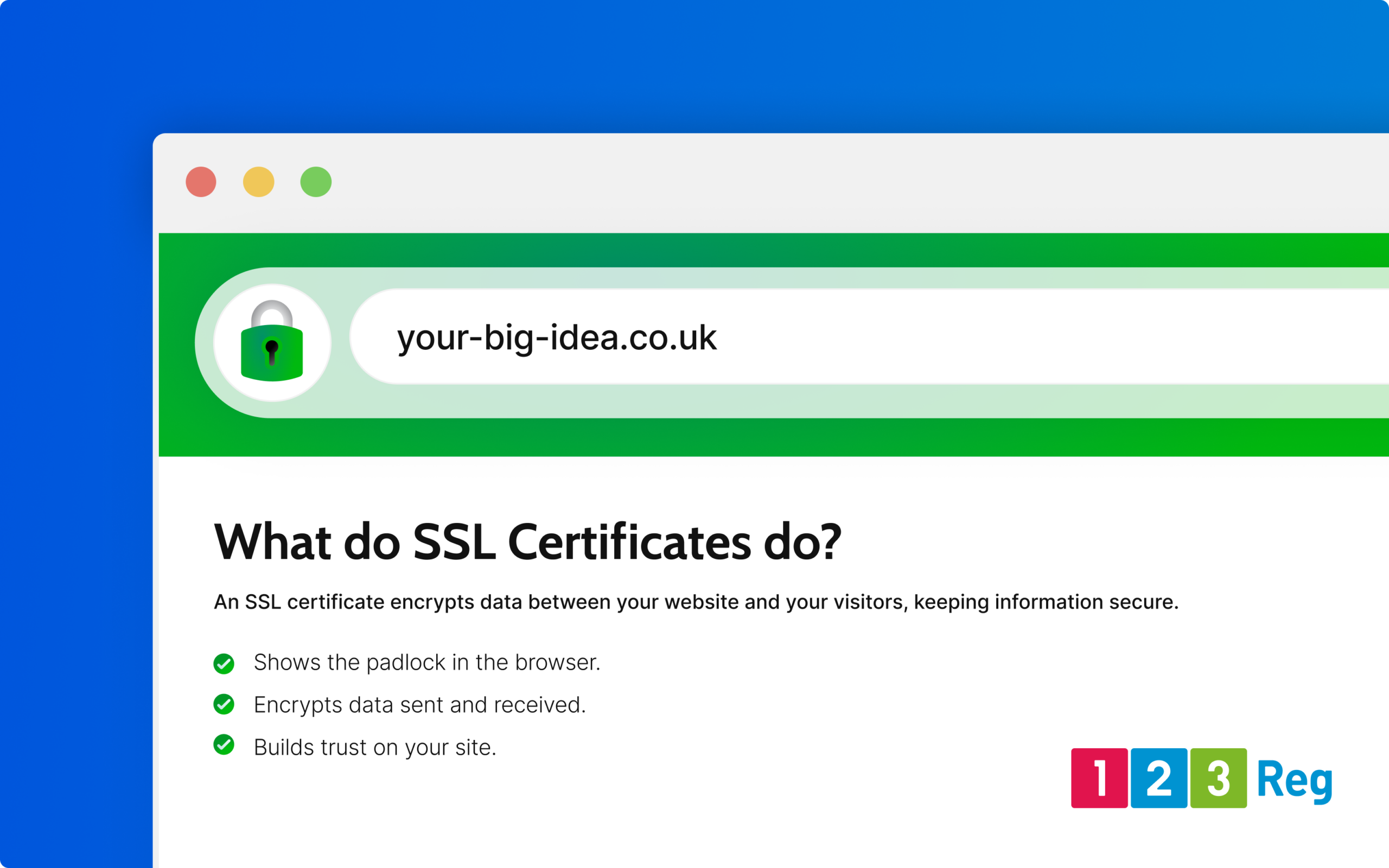
An SSL certificate (now technically TLS) is a digital ID that confirms your website is genuine and keeps information safe. It encrypts things like logins, contact forms, and payments, so they can’t be read by anyone else. You’ll recognise it by the padlock icon in the browser — a simple sign your site is secure.
While “SSL” is the name most people use, this now runs on a newer, more secure technology called “TLS” (you might see it described as an “SSL/TLS certificate”).
Why it matters
Without SSL, browsers can flag your site as “Not Secure,” which is often enough to put people off straight away, especially if you’re asking for personal or payment details. Having SSL helps customers feel more comfortable buying or getting in touch, supports your visibility in search engines like Google, and can make a real difference to how many visitors stick around and convert.
In fact, modern search engines like Google won’t even show your website in unless you have one! Click here to learn more about SSL Certificates
Subdomain
What is a subdomain?
A subdomain is a prefix added to your main domain, like shop.yourbusiness.co.uk or blog.yourbusiness.co.uk. It helps you split off areas of your site—such as a shop, blog, or support page—under the same main domain.
Why it matters
Subdomains make it easy to organise different parts of your website while keeping everything under one brand and domain family. Usually though, they don’t matter — you don’t need to type the www.
T
Theme / Template
What is a theme or template?
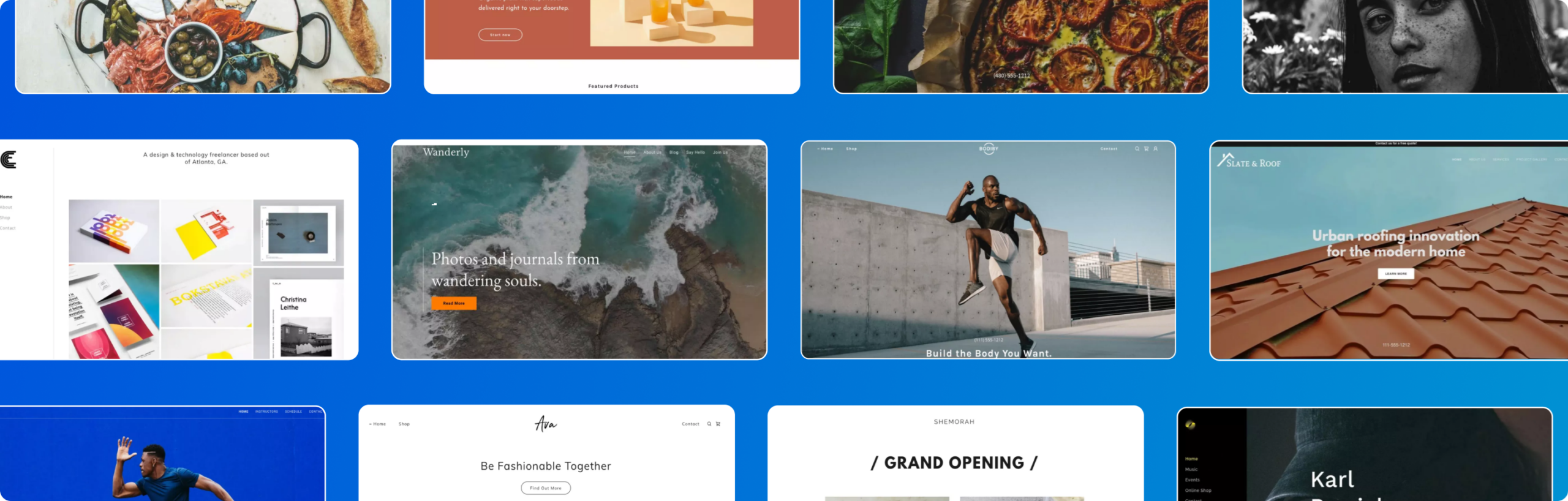
A theme or template is a ready‑made design for your site, especially in tools like WordPress or Website Builder. You start with a structured layout and then adapt colours, fonts, and sections to your brand, instead of building everything from scratch.
Why it matters
A theme or template saves time and design effort by providing a mobile‑friendly, fast, and usable layout you can customise quickly. The right theme should work for what you do, reflecting your business type and goals while helping you launch faster and stay optimised across devices.
Website Builder comes with dozens of business‑ready professional templates so you can get going right away.
TLD (Top-Level Domain)
What is a TLD?
The ending of your domain, like .co.uk, .com, or .org. Some endings feel more local or industry-specific. See Domain Extension.
With over 400 domains to choose from with 123 Reg, you’re bound to find the perfect fit.
Traffic
What is website traffic?
The number of visitors and visits your site receives. Hosting plans often mention how much traffic they can handle.
Why it matters
Traffic shows how many people are actually seeing your site. If your hosting can’t cope, pages slow down or fail, which can put customers off and hurt your search visibility. Broadly speaking though, traffic is a good thing!
U
Uptime
What is uptime?
Uptime is the percentage of time your website stays online and accessible. Many hosts promise at least 99.9% uptime in their service level agreements (SLAs).
Why it matters
High uptime means your site is almost always available when customers want to visit, helping you avoid lost sales, frustrated visitors, and damage to your search rankings.
URL
What is a URL?
A URL is the full web address of a page, including the ‘protocol’ (like https://), your domain name, and the TLD (like www.123-reg.co.uk). It’s the complete clickable address people use to visit your site, and clear URLs help customers know exactly where they are in your online world.
In case you’re wondering, URL stands for ‘Uniform Resource Locator’ (though, in plain English, people are much more likely to ask “What’s your web address?”)
Why it matters
Good URLs make your site look clean and intentional, turning your domain name and TLD into easy‑to‑read addresses that feel professional. They help customers find what they’re looking for at a glance and stay on your site longer, which means more chances to turn visits into leads or sales.
UX / User Experience
What is User Experience?
User Experience (UX) is how people feel when they use your website — how easy it is to navigate, find information, and complete tasks like buying or contacting you.
Why it matters
Good UX makes your site intuitive and enjoyable for visitors. It helps customers find what they need quickly, keeps them engaged longer, and can increase the chances they take action, like making a purchase or signing up. Paying attention to UX benefits both your visitors and your business goals.
V
Virtual Private Server (VPS)
What is a VPS?
A VPS, or Virtual Private Server, is a hosting option that gives you your own dedicated portion of a physical server’s resources like CPU, memory, and storage. Unlike shared hosting where many sites share everything, a VPS acts like your private slice of the server. It’s ideal when your site grows busier and needs more power, stability, and control.
Why it matters
A VPS handles more traffic without slowing down, keeps your site more secure by isolating it from others, and gives you the freedom to tweak settings and software your way.
With 123 Reg, VPS Hosting is a natural next step from shared hosting as your business scales — offering root‑level access and server‑like control at a fraction of the cost of a full dedicated server.
VPN / Virtual Private Network
What is a VPN?
VPN stands for Virtual Private Network. Not to be confused with VPS above, a VPN is a security tool that creates a secure, encrypted connection between your device and the internet. The idea is to hide your IP address and protects data on public Wi-Fi.
Why it matters
Good VPN use keeps your online activity private from hackers and snoopers. It helps businesses securely access files or work remotely without risking sensitive information.
See also: 10 Security Myths Debunked for Online Business Owners
W
Website Builder
What is Website Builder?
Website Builder is 123 Reg’s easy‑to‑use tool that helps you create a professional, mobile‑ready website without coding. You start with a ready‑made template and personalise it with your images, colours, videos, and branding, while AI can even draft your page content in seconds.
Why it matters
Website Builder bundles hosting, a free domain for the first year (.co.uk, .uk, .com), custom email (like you@yourbusiness) and an SSL Sertificate into one simple package. With dozens of business‑ready templates and 123 Reg support, you can launch fast, look polished on any device, and spend more time running your business than wrestling with tech.
See also: Website Builder vs Web Hosting – Which Works Best for Your Business?

Website Speed / Performance
What is website speed/performance?
Website speed is how fast your pages load for visitors. Faster sites make your traffic feel smoother, reduce bounce rate, and keep people on your site longer.
Why it matters
Good website speed improves user experience, supports better SEO, and helps you make the most of your traffic. A good web host like 123 Reg gives you the infrastructure to keep your site zippy and responsive even during busy periods.
WordPress
What is WordPress?
WordPress is the world’s leading content management system (CMS), trusted by millions of website owners and powering over 40% of all sites worldwide. It’s a flexible, user‑friendly platform that makes it easy to build anything — from a simple blog or small business website to a full‑featured online shop.
With thousands of free and premium themes and plugins, you can customise every part of your site to match your vision. While WordPress itself is free to use, you’ll need reliable hosting to get your site online — and to keep it fast, secure, and always up to date.
Why it matters
WordPress is beginner‑friendly enough to start quickly, yet powerful enough to grow with your business. It works for all types of websites — from the simplest blogs to full‑featured ecommerce.
With 123 Reg Managed WordPress Hosting, you get one‑click installs, fast hosting performance, expert support. You’re also set up with a choice of business-ready themes suited to your type of business, so you can hit the ground running with a professional-looking site from day one.
WWW
What is WWW?
WWW is a prefix often used in web addresses, like www.yourbusiness.co.uk. It originally stood for World Wide Web, the system invented by Tim Berners-Lee in 1989 to share information across the internet. Today it’s mostly optional (both www.123-reg.co.uk and 123-reg.co.uk would usually lead to the same site).
Why it matters
WWW is now a standard subdomain that many sites keep by default, even if it is not needed. It helps keep the look and feel of your address the same for your brand, and a solid host like 123 Reg makes sure your site works no matter how people type it.
X
XML sitemap
What is an XML sitemap
Scary-sounding, an XML sitemap is just a file that lists your key web pages to help search engines like Google find and index them. Think of it as a simple roadmap that shows search engines what to crawl.
Why it matters
Having a good sitemap helps your site show properly in search. However, if you’re using Website Builder, you don’t need to worry — it automatically takes care of sitemaps behind the scenes.
If you use Web Hosting, you can set this up yourself with a plugin (for example, an SEO plugin), but on Managed WordPress Hosting this is handled for you as part of the service.
Y
Your Cache / Caching
What is caching?
Temporary storage that helps your site load faster for repeat visitors. Sometimes you’ll be told to “clear cache” after making changes so you see the updated version.
Why it matters
If your pages load quickly, visitors are more likely to stick, click, and buy — and search engines tend to favour that too. Of course, cache (and cookies) can build up over time, so many people choose to delete them or use cookie-free browsers. If you update your website, you may also need to clear your cache to see the new version.
Z
Zero‑Downtime Migration
What is zero‑downtime migration?
Moving your site from one host to another without it going offline.
Why it matters
Your site stays live while everything is moved over, so visitors can still find you, browse and buy without interruption. Zero-downtime migrations mean you can avoid lost sales, broken pages or frustrated customers.
It’s also a good way to round off an A-Z list of web terminology!
Wrap up
You don’t need to memorise every tech term to run a successful website. Focus on the basics: your domain is your address, hosting keeps your shop-front live, and tools like SSL, mobile design and backups make it safe, welcoming and reliable for customers. With 123 Reg, these pieces fit together easily — so you can focus on growing your business (not the tech behind it).