
If you’re launching a website, buying the right domain name is one of the first (and most important) decisions you’ll make.
But with so many domain extensions, providers and price ranges to choose from, it’s easy to wonder: how much should a domain name actually cost?
In this guide, we break down typical domain name prices in the UK, explain why costs vary so much, and show you exactly what to check before you buy, so you can buy a good domain without overspending.
Key takeaways
- ☑︎ Many 123 Reg domains cost only around £15 a year, making them a great-value home for your brand.
- ☑︎ Can’t get the exact name you want? Adding a location or keyword can get you something just as strong for a fraction of the price. 123 Reg’s AI Domain Search makes finding the perfect fit quick and easy.
- ☑︎ Domain renewals can cost more than the introductory offer, so check the renewal price before you register.
- ☑︎ Domains are first-come, first-served, so the best time to register your domain is now.
Why does a domain name matter?
A domain name is your address on the internet. It’s the text people type into their browser (like yourbusiness.co.uk) to find your website. It can also become the part after the @ in your email address. In short, it’s how customers find you, remember you, and recognise your brand online.
Every domain is unique and registered on a first-come, first-served basis. Once it’s taken, it belongs to that owner until it expires or is sold. That’s why the name you choose, and when you register it, matters.
Before we look at exact prices, it helps to understand what a domain name gives your business, and what you risk by waiting.
Here’s what that small yearly cost actually buys you:
✓ Credibility: a proper domain (your-big-idea.co.uk) looks more trustworthy than a free subdomain or relying only on social profiles
✓ Professional email: swap yourbusiness123@freemail.com for your-big-idea.co.uk
✓ Full ownership: once registered, you have the right to use your domain for the registration period, provided you keep it renewed.
Put into perspective, a domain name is one of the cheapest ongoing costs you’ll ever have for your business.
For often less than the price of a coffee a month, you get a permanent, professional home for your brand online, plus a foundation for everything you do on the web.
How much does a domain name cost?
A domain name can cost from just a few pounds for the first year, especially when there’s an introductory offer. The price you pay for a domain name in the first year can be different from the price you’ll pay to renew it each year.
For popular domain extensions (also known as TLDs or domain endings) such as .co.uk, .uk and .com, you can generally expect to pay around £12–£20 a year at renewal. Less common extensions may cost more, while premium domain names can be significantly more expensive.
The total cost of a domain depends on the domain extension you choose, whether the name is available at the standard rate or is classed as premium, and the provider and offer you choose. Always check both the first-year price and the renewal price before registering your domain.
Here’s a quick snapshot of what that typically looks like across some of the most popular extensions:
Popular domain extensions*
| TLD | First year | Renewal | Focus |
|---|---|---|---|
| .co.uk | £3.99 | £12.99 | UK identity |
| .uk | £3.99 | £12.99 | UK identity |
| .com | £0.01 | £18.99 | Global reach |
| .info | £4.99 | £32.99 | Sharing knowledge |
| .ltd | £1.84 | £77.99 | Company branding |
| .pro | £3.99 | £32.99 | Showing expertise |
| .group | £1.84 | £77.99 | Communities and teams |
| .studio | £16.99 | £59.99 | Creative projects |
| .agency | £0.99 | £40.99 | Creative and client work |
| .digital | £22.99 | £22.99 | Digital-first ideas |
| .global | £37.99 | £125.99 | Worldwide ambitions |
| .online | £0.99 | £40.99 | Online-first ideas |
| .store | £13.99 | £51.84 | Selling online |
*Prices correct as of September 2026 and subject to change.
Prices vary depending on the extension, but a few patterns are worth pointing out:
✓ Popular extensions like .com or .co.uk: usually just a few pounds in year one, then a modest yearly renewal after that
✓ Niche or newer extensions (like .studio or .expert): similarly affordable, often with welcome offers to get you started
✓ Premium or highly sought-after names: can range from tens to thousands of pounds, depending on demand
✓ Add-ons like WHOIS privacy: sometimes included free, sometimes a small extra yearly cost
If you already have a name in mind, checking its availability now takes just a few seconds, and locks in that price before someone else does.
Why do domains cost different prices?
Availability
Available domain names are usually sold at the standard registration price. If someone already owns the name, you’ll need to buy it from them instead, and these resale (or “aftermarket”) domains can cost a lot more.
Demand
Popular names are worth more because more people want them. Short, memorable domains and common words are often in high demand, which pushes up the price. This is where you see the truly premium names (like music.com or sports.com) at the very top end, the most expensive domains ever sold have gone for tens of millions of dollars.
Length
Short domain names are easier to remember and type. Because there are fewer short names going, they tend to cost more.
Keywords and trends
Words linked to popular industries, products or trends can also push the price up. A domain with a valuable business keyword in it will usually attract a premium.
Domain extensions
Different extensions come with different prices. A .com might cost more than a newer or less common extension, and some extensions carry their own premium pricing.
Finding an affordable option
If your first choice is unavailable or too pricey, try adding a location or descriptive word instead. yorkshire-music.com or bristol-sports.com, for example, will usually cost a fraction of their shorter counterparts, while staying just as clear. You could also try a different extension. Small tweaks like these are often all it takes to land a good, cheap domain.

How much should you spend on a domain?
There’s no single “right” amount to spend on a domain. It depends on what stage your business is at, and what you need the name to do for you.
Personal websites, freelancers, and side hustlers
If you’re just starting out, there’s no need to overspend. A standard extension at standard pricing is usually all you need to look professional and get online, so save the bigger budget for building your website instead.
Startups and small-to-medium businesses
At this stage, it’s worth spending a bit more time (and maybe a bit more money) getting the name right, since it’ll likely become a core part of your brand. A memorable domain is worth a modest premium, but there’s rarely a need to stretch to full premium pricing unless the exact name is essential to your branding.
Larger, established businesses
For bigger or more established businesses, investing more in a domain can make sense, especially if it protects your brand, secures multiple relevant extensions, or captures a highly searched term in your industry. Here, spending more upfront can pay for itself many times over in recognition and trust.
For more, check out: Is Buying A Cheap Domain Worth It?
How do I choose a good domain name?
A good domain name is short, easy to spell, and easy to remember.
A few quick tips: keep it as close to your business name as possible, avoid hyphens and numbers where you can, and pick an extension that suits your audience (like .co.uk for a UK-based business).
If you’re stuck for ideas, 123 Reg’s AI Domain Search can help. Just describe your business and it’ll generate relevant name suggestions in seconds, so you can go from idea to registered domain in no time.
See also: How to Choose the Best Domain Ending in 2026
What should you check before buying a domain?
Before you buy a domain, look beyond the headline price. Check the terms, ongoing costs and what’s included so you know what you’re signing up for and don’t get caught out later.
Registration and renewal
Most domains are registered for one year, though some providers let you sign up for longer. Check how long you’re committing to, whether a longer term offers a better price, and what you’ll pay when the introductory period ends.
VAT and total cost
Some advertised prices don’t include VAT, so the amount at checkout could be higher than the headline price. Check the full cost before deciding.
What’s included?
A domain may come with useful extras, such as privacy protection, email forwarding or basic DNS management. Check what’s included and what costs extra so you can compare providers fairly.
Transfer terms
You might want to move your domain to another provider down the line. Check for any transfer locks or restrictions, and what you’d need to do to move it. Some domains can’t be transferred shortly after registration or renewal.
Expiry and recovery
If you miss a renewal, your domain may enter a grace period before moving into redemption. You can often get it back during this time, but extra charges may apply. Set up renewal reminders or automatic renewal to avoid the risk altogether. Exact timings and fees vary by extension and provider.
Should you buy multiple domain extensions?
It’s worth thinking beyond just one domain. Many businesses register a few variations of their name to protect their brand and avoid confusion later on.
✓ Matching extensions: getting both .com and .co.uk so customers land on your site whichever they try
✓ Common misspellings: registering close variations of your business name so typos don’t send customers to a competitor (or worse, a scam site)
You don’t need every variation, especially early on, but for growing businesses, this kind of defensive registration is often a small price for peace of mind.
See also: .com vs .co.uk — Which Domain is Best for Your British Business?
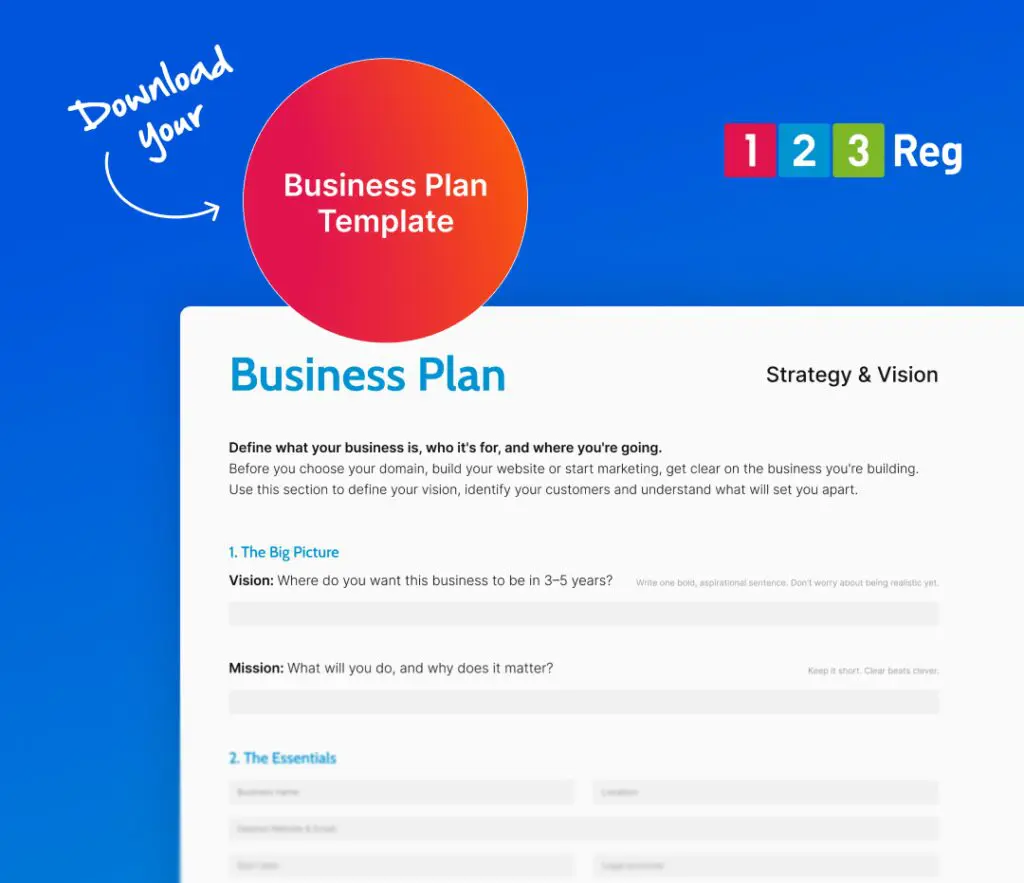
Our Free Business Plan Template helps you map out your next steps, so you start with a clear plan. Download it here.
What if the domain name you want is already taken?
If your first-choice domain is already registered, you’ve got a few options. Sometimes the current owner is open to selling. If so, it’s usually best to go through a broker or domain marketplace rather than contacting them directly, as that can sometimes drive the price up.
Alternatively, many businesses find that a creative tweak gets them a name that works just as well, often for a fraction of the cost. Adding a location or keyword (like yorkshire-music.com instead of music.com), or trying a different extension, can turn an expensive dead end into an easy win.
For more, check out: How to Check If a Domain Name Is Taken or Available
Is it worth paying more for a ‘Premium’ domain name?
For most businesses, a standard domain at a standard price is all you need. But for some, paying more for the right name can be a smart move rather than a waste of money.
What makes a domain “premium”
Premium Domains are often short, easy to remember, made up of a common word, or closely tied to a popular industry or search term. Names like music.com or sports.com are prime examples.
These names are in high demand but short supply, so they’re usually already registered and get resold at a price that reflects their value rather than standard fees. Premium domains can range from tens of pounds to many thousands, and at the very top end, the most expensive domains ever have gone for tens of millions of pounds.
You don’t need to spend anywhere near that for a good name, though. If you want a cheap domain, simply throwing another word into the mix can bring the price right down while keeping things clear (think yorkshire-music.com or bristolsports.com, instead) — usually a fraction of the cost of their shorter counterparts, but still short and professional with that .com ending.
When the investment pays off
Paying a premium makes the most sense when the domain does real work for your brand: it’s easy to remember and spell, it builds instant trust, or it captures a search term central to your business. For a growing business, a well-known local shop, or a company that relies on being found online, that visibility and trust can pay for itself many times over.
That said, a high price tag doesn’t guarantee a great result. Weigh the cost against what the name will really add, rather than paying more just because it’s available. Often, a longer, more specific name gets you most of the benefit for far less money.
Wrap up
A domain name is one of the smallest costs in running a business, but one of the most important decisions you’ll make. For most people, a standard extension at a standard price is all it takes to get online and look the part. Whether you save with a smart tweak or decide a premium name is worth the extra spend, the main thing is not to wait. The longer you leave it, the more likely someone else registers it first.
Ready to find your perfect domain? Search available domains and get your business online today.

FAQ
How much does a domain name cost in the UK?
Most UK domain names cost between £5 and £15 a year, though popular extensions like .co.uk often start from just a few pounds in the first year. Prices vary by extension and demand, so it’s worth comparing a few options before you buy — browse available domains to see live pricing for your chosen name.
Can I get a domain name for free?
With most 123 Reg annual hosting plans, you get a free domain name included for the first year, so you can get online without any extra cost upfront. From year two, it renews at the standard price, but that first year is a great way to get started for less.
See also: How To Get a Free Domain Name
What is included with a 123 Reg domain?
Every 123 Reg domain comes with essential DNS management and email forwarding, so you can get your domain working straight away. Want extra peace of mind? Add WHOIS privacy protection or bundle in a professional email address for a small yearly cost.
Do domain transfers cost extra?
Transfers are free on select domains, including .co.uk and .uk, though your current provider may still charge a release or admin fee on their end — worth checking before you start. Once transferred to 123 Reg, you can manage renewals, DNS, and email all in one place.
Is web hosting included with a domain?
No, a domain name and web hosting are usually separate purchases, though many providers offer bundled deals to save you money. If you don’t have hosting yet, pairing your new domain with a hosting plan is the easiest way to get your website live fast.